Homemade Ricotta

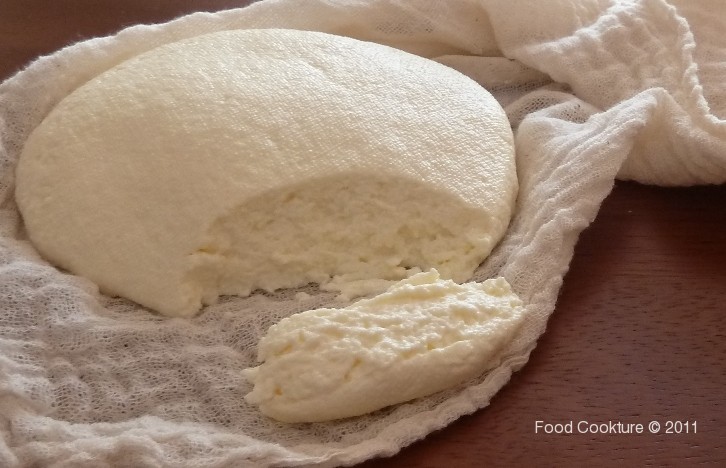
Fresh ricotta is my latest food obsession. It only requires a few ingredients and is very quick and easy to make. Once you have seen how simple it is to achieve a rich and creamy ricotta at home (unlike store-bought which tends to be dry and “rubbery”) you will find no reason to buy ricotta ever again; unless you live in Italy of course! :-)

Traditional ricotta is made from the milk whey leftover from making cheese (after the milk curds are separated to make the cheese, the leftover liquid is known as “whey”). Italian ricotta is usually made from the whey of cow, goat, sheep, or water buffalo’s milk. Ricotta means “recooked” in Italian, as it is not really a cheese, but the recooked whey leftover from making cheese. At home, you can simply use milk (and cream) and a little lemon juice (and/or vinegar) to make a delicious ricotta in less than 1 hour.
My inspiration
I recently returned from Italy where I had creamy, luscious, fresh ricotta. Upon returning to the US, I had what I called “gastronomic depression”… my stomach was very sad as it realized it had to adjust to the lack of amazing Italian flavors and foods of my recent trip to Milan and Modena.

The day after I returned, I started researching how to make ricotta and found, to my surprise, it was amazingly simple! I was so happy! Ignoring my jet lag, I ran to buy some cheesecloth and a cooking thermometer to start experimenting right away…
About this recipe
I tried (many) different recipes and proportions of milk, cream, lemon juice and vinegar to make my ricotta; I found mixing equal amounts of cider vinegar and lemon juice creates a more delicate flavor than just using one or the other. My favorite combination is to use whole cow’s milk and a little bit of cream; I have also tried with reduced fat (2%) cow’s milk with good results. Some natural dairy fat is necessary for the creamier texture and richer flavor to be achieved. I didn’t try making it with skim cow’s milk or goat milk, nor did I try it with lime juice instead of lemon juice. I would suggest using the best quality of milk available, as that is the main ingredient and the one you will taste (I use organic local farm’s milk and cream).

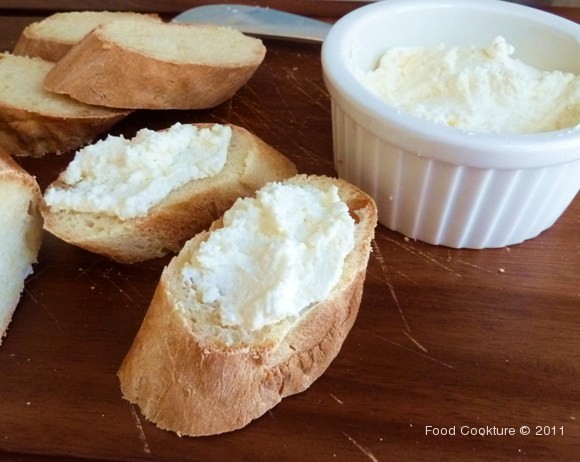
You can spread the ricotta on fresh bread (with honey or olive oil if you wish) or use it for any recipe that calls for ricotta such as pasta filling or torta di ricotta (recipes coming soon). The leftover liquid after straining the ricotta is buttermilk, which you can use for many other recipes including breads and cakes (in substitution for water or milk in the recipe).

Homemade Ricotta
Yields approx 2 cups (approx 400-440g) of ricotta (depending how long ricotta is strained) and 3 cups of buttermilk.
Prep time: 2 min
Cook time: 10 min
Inactive cooking time: 40-60 min (straining)
Cooking temp: 175°F/80°C

Ingredients:

  • 4 1/2 cups (1 L) organic whole cow’s milk (see above for other types of milk)
  • 1 cup (250ml) heavy whipping cream (approx 30-36% milk fat) (click here for information on different types of creams)
  • 1 TBL freshly squeezed lemon juice
  • 1 TBL organic filtered apple cider vinegar
  • 1/2 tsp coarse salt

Tools needed:

  • Sieve
  • Cheesecloth* (click here for care and cleaning tips)
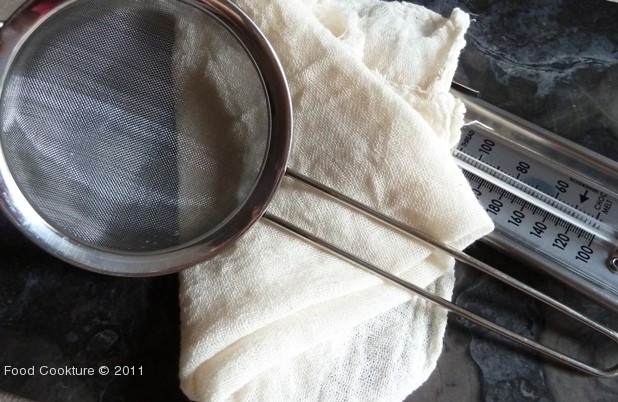
  • Cooking thermometer* for liquids/candy/deep frying (or follow directions below)
  • Non-reactive pan (made of ceramic or stainless steel). Do not use an aluminum pan as the liquid will not curdle (and you won’t have any ricotta). If you only have aluminum pans, follow recipe up to the point of adding the lemon juice/vinegar mixture.   Once liquid has reached desired temperature, pour liquid into a glass, ceramic or stainless steel bowl and THEN add the lemon juice/vinegar mixture.  Continue as indicated below.

*Note: You can find cheesecloth and cooking thermometer in most house goods stores and supermarkets.  If you don’t have a cheesecloth, a heavy-duty paper towel can be used in its place (once done, be careful not to rip the wet paper towel when removing the ricotta).

Directions:

  1. Set up the thermometer to the side of the pan (if using one as shown in the picture). Pour milk, cream, and salt into non-reactive pan and stir constantly over medium-high heat, until the thermometer reads 175°F/80°C.
    1. Note: Without a thermometer – this is the point just before boiling when the liquid steams and turns into a creamier consistency (approx 10 minutes).
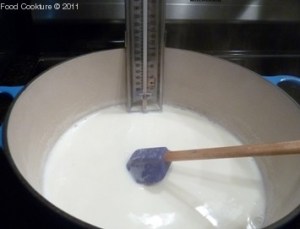
  2. Remove pan from heat and add lemon/vinegar mixture. Stir only a couple of times and let liquid rest for 10 minutes. You will then see the milk begin to curdle right away.
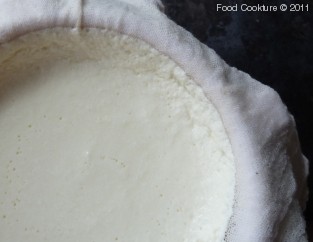
  3. Set up a sieve over a bowl and cover the sieve with the cheesecloth. Slowly pour liquid over the cheesecloth. Depending how much you make, either use a large sieve or set up two separate stations to make the ricotta.    
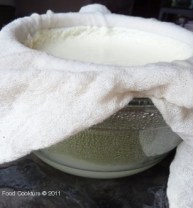
                                
  4. Let it rest for approximately 30-40min or up to 1hr depending how soft you want the consistency to be. You can leave it longer if you would like firmer ricotta.
    1. Note: Ricotta will continue to firm after it cools. Do not overstrain or ricotta will be dry. IF you overstrain, and the ricotta becomes a little “drier” than you would like, you can take a teaspoon or two of the strained liquid and slowly add it to the ricotta (add more until you achieve desired consistency).
  5. Once cooled, transfer to an airtight container and store it in the fridge for up to 1 week (best to consume within 4-5 days for freshest flavor).

I like having fresh ricotta so much, I’ve been making it every week since I returned from Italy over a month ago! It has become a staple item in my kitchen. I hope you make it soon, as I know you too will enjoy it!

Posted in Appetizers, Brunch/Breakfast, Desserts, Side Dishes, Snacks, Vegetarian | Tagged , , , , , , , , , , , , , , , , , | 18 Comments

Carrot Cake… Brazilian style

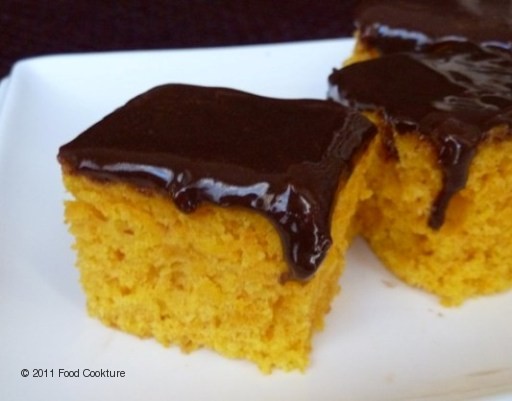
Brazilian carrot cake – or bolo de cenoura- is delicious and simple to make. It’s a very popular cake in Brazil among children and adults. Some carrot cakes (mainly in the US and the UK) are often made with grated carrots, nuts, spices, coconut, raisins, and pineapple – all topped with a cream cheese frosting. In Brazil, carrot cake is made with carrots as the only flavoring ingredient and is usually covered in a chocolate glaze (unlike “frosting” or “icing” which usually refers to a dense whipped butter-sugar-mixture). The contrast in colors from the dark glaze over the bright orange cake is visually appealing; while the combination of flavors from the chocolate and the subtle sweetness of the carrots are truly delightful.

About this recipe
This is a family recipe which I have modified to reduce the amount of sugar and fat while not sacrificing texture or flavor. My version of the recipe has half the amount of oil and is still super moist because of the carrots and addition of milk. The carrots and the milk also naturally sweeten the cake; therefore I have reduced the amount of sugar in both the cake and the chocolate glaze.

Cocoa powder is often used for this glaze instead of melted chocolate. The cocoa powder gives an intense chocolate flavor and a shiny coating (not achieved from melted chocolate unless adding butter or oil). You may substitute this glaze for a ganache (melted chocolate with cream or milk) or another chocolate frosting, but I prefer the traditional Brazilian chocolate glaze – or cobertura de chocolate- usually made for this recipe.

Brazilian Carrot Cake (Bolo de Cenoura)
Yields approx 24-28 pieces (approx size: 2×2 inches/5x5cm) if using rectangular 12×9 inch (30x23cm) pan.
Prep time: 10-15 min
Cook time: 30-40 min (cake) 5-8 min (glaze)
Cooking temp: 350°F/180°C

Ingredients:

  • 4 small or 3 medium (250g) carrots, chopped
  • 3 eggs, separated yolks and whites
  • 1 ½ cups (300g) granulated (superfine/caster) sugar
  • 1 tsp (5ml) pure vanilla extract
  • 1/3 cup + 1 Tbl (100ml) vegetable oil (I use canola)
  • ½ cup milk (125ml) (you can replace the milk by adding an equal amount of oil to the recipe)
  • 2 cups (280g) all-purpose flour
  • pinch of salt
  • 1 Tbl (15g) baking powder

Chocolate glaze:

  • 1 cup (250ml) milk (more if you prefer a thinner coating)
  • 4 Tbl (24g) unsweetened cocoa powder
  • ¼ cup (50g) granulated sugar (if you prefer it sweeter, you can add another ¼ cup or 50 g of sugar – for a total of ½ cup or 100g of sugar)
  • 1 Tbl (9g) corn starch

Cake directions:

  1. First separate the egg yolks from the whites and beat the egg whites into stiff peaks. Set aside.
    1. Note: Beating the egg whites separately incorporates more air into the batter; which is a very important step to achieving a soft fluffy cake (I do this for every cake recipe). However, to simplify, you can also put the entire egg into the blender if you wish to skip this step.
  2. Blend the chopped carrots, egg yolks, sugar, vanilla, oil, and milk in a blender until well mixed and carrots are thoroughly blended.
    1. Note: I usually blend for approximately 5 minutes to make sure the eggs are well blended and not leave an “egg-y” smell or aftertaste.
  3. In a separate bowl, sift flour and salt. Pour carrot blended mixture into the dry ingredients bowl and mix well.
  4. Slowly combine 1/3 of the whipped egg whites into the batter (the batter will feel a bit “heavy” so incorporate the egg whites slowly not to take away the “airiness”). When well mixed, slowly combine the rest of the egg whites into the mixture.
  5. Add the baking powder and slowly incorporate it into the batter; do not over mix at this point.
    1. Note: Baking powder is very delicate and should always be added as a last step whenever possible.
  6. Butter and flour a baking pan (I usually use a rectangular 12×9 inch (30x23cm) pan, but you can use any shape you prefer).
  7. Bake at 350°F/180°C for 30-40 minutes.
    1. Note: Adjust cooking temperature depending on the size and type of pan you use. Check the cake at 20 minutes to perhaps adjust cooking time.
    2. Important note: Every oven is different and I always check recipes approximately half-way and again two-thirds of the way to make sure I don’t overcook anything; especially when making a recipe for the first time.

Chocolate glaze directions:

  1. Combine milk, cocoa powder, sugar, and corn starch into a blender or mix thoroughly.
  2. Pour into sauce pan and cook over low-medium heat stirring frequently so the mixture does not stick to the bottom of the pan.
  3. Once the mixture begins to thicken (approx 5-8min), remove it from heat and pour it over the carrot cake while still warm.

I hope you enjoy one of my favorite cake recipes. Even if you have made “bolo de cenoura” before, try this recipe and you will see you won’t miss the reduction of sugar and oil in it. Let me know how it turns out!

Posted in Brunch/Breakfast, Cakes, Desserts, Snacks, Vegetarian | Tagged , , , , , , , , , | 6 Comments

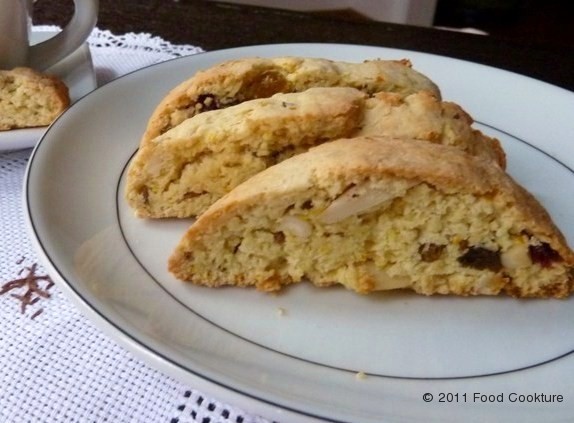
Biscotti… with a twist

Everyone likes biscotti! Traditional Italian biscotti (or “cantucci” as they are known in Italy) are from Tuscany and are enjoyed with Vin Santo (Tuscan dessert wine). They are commonly known as biscotti (plural for biscotto, which means “twice-baked”) because no one can eat just one! :-)

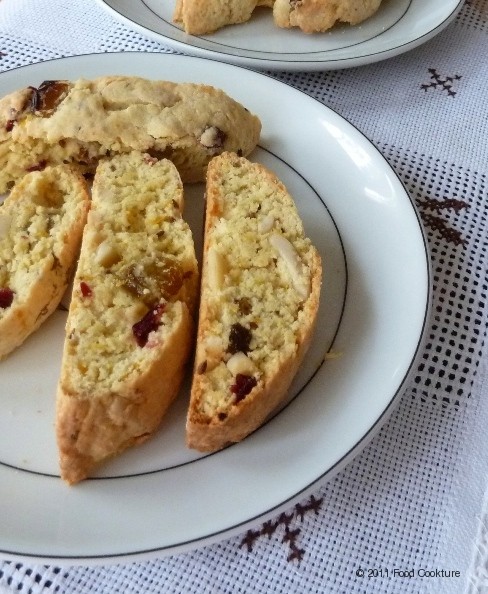
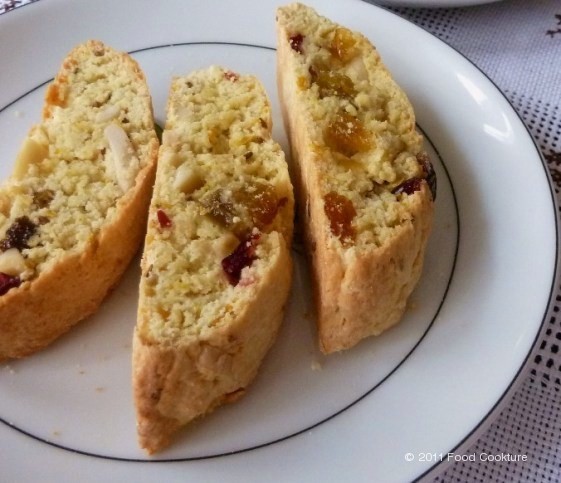
My biscotti take a twist and turn from the traditional recipe. They are softer in texture, yet still crumbly without being dry. I add additional ingredients to the traditional recipe that offer a delightful mix of flavors in just one bite. I’ve tried biscotti of different flavors: plain, chocolate, with or without nuts, and even dipped in chocolate. I don’t discriminate, I like them all. However, at home, I always go back to this recipe; I have been making it for years and no one has allowed me to change it. I have always called them “miei biscotti” (“my biscotti” in Italian); and now, they are also yours!

About this recipe
I have reduced the amount of sugar and fat (so you can enjoy an extra biscotto or two without guilt). You can of course omit or replace any of the flavoring ingredients if you are not on friendly terms with them. They don’t overpower each other, and together, they bring out an amazing combination of flavors. These biscotti are always a success with anyone who’s tried them. They are so good you’ll find an excuse to eat them all day long!

Miei Biscotti
Yields 20-24 small biscotti (approx size: 2.5-3 inches/ 5-6cm)
Prep time: 10-15 min
Total cook time: approx 20 min
Cooking temp: 350°F/180°C

Basic ingredients:

  • 2 cups (280g) of all-purpose flour
  • ½ cup (100g) granulated (superfine/caster) sugar
  • 1 tsp (5g) baking powder
  • 3 Tbl (40g) unsalted butter (softened)
  • 2 large eggs

Flavoring ingredients:

  • ¼ cup (27g) slivered almonds
  • 1 Tbl (7g) anise seeds
  • ¼ cup (25g) dried cranberries
  • Grated peel (zest) of 1 large orange
  • ½ cup (75g) golden raisins (if they are not plump and moist, let them soak in orange juice for 5-10min) (raisins also known as “sultanas”)
  • 2 Tbl orange juice (for soaking the raisins, otherwise just add to dough)

Directions:

  1. Sift flour, salt, and baking powder in a large bowl. In separate bowl, beat eggs, butter, orange juice and orange zest and add to flour mixture. Stir with a fork until dry ingredients absorb the liquid.
  2. Add anise seeds, almonds, cranberries, and raisins to the bowl and mix by hand. Kneading the dough until it can be made into a ball.
    1. Note: I prefer golden raisins in this recipe because black raisins’ sweetness can overpower the taste of the other ingredients. You can always reduce the amount of anise seeds, but try not to eliminate them; they add a special subtle note to this recipe.

Shaping the biscotti:

  1. Divide dough in half and shape into 2 logs.
  2. I usually shape the logs about 10-12 inches (20-25cm) long, and 2.5 inches (5cm) wide. You may shape the logs thinner and longer (smaller biscotti) or shorter and wider (larger biscotti). If you change the size from my suggestion, adjust cooking time accordingly; the thinner the log the faster it will cook.

Baking the biscotti:

  1. Butter and flour a baking sheet (or use parchment paper or silicone mat) and bake the logs for 12-15 minutes (until light golden color) in a preheated oven at 350°F/180°C.
  2. Take them out of the oven and with a serrated bread knife, carefully cut the logs into ¾ inch (1.5cm) wide slices. Each log should yield about 10-12 biscotti depending on size. Don’t cut too thin or it will crumble. Note: Be careful when cutting as logs will be hot.
  3. Separate the “half-moon” shaped slices slightly apart on the baking sheet (but leave them standing up so they continue to cook on both sides) and return them to the oven for another 5-8 minutes or until slightly darker golden color. Pay attention not to overcook them or they will become hard.
  4. Let them cool for approximately 20-30 minutes (if you can wait that long). Make sure they are completely cool before storing them in an airtight container.

I usually double the recipe because they go so fast! They can last 1-2 weeks if properly stored. Mine have always disappeared within the first couple of days I make them. I hope you enjoy these biscotti as much as I do!

Posted in Breads, Brunch/Breakfast, Cookies, Desserts, Snacks, Vegetarian | Tagged , , , , , , , , , , , , , , , | 12 Comments

Celebrating Family (Fresh Pasta Recipe)

Growing up, every Sunday when my grandmother cooked, it was always a feast. One of my favorite dishes (and fondest memories) of my grandmother’s cooking is her fresh pasta. I always think of her when I make my own. As a child, I loved watching her make fresh pasta. She would give me a piece of the dough to play with, and I attempted to imitate her every move.

During my last visit to Brazil, I wanted to make a special meal for my family where I honored my grandmother for all those years cooking for us, especially making fresh pasta without a pasta machine! She is a woman who believes in the value and taste of cooking from scratch and I learned so much from her. So I made fresh pasta for my 92 year old grandmother and my 95 year old grandfather. She came to the kitchen to watch me, and said she was proud and happy to see how much I love to cook.

It was a meal that brought tears to my eyes. My grandparents had full servings (don’t let their age fool you, they both have quite a healthy appetite) and told me it was the best pasta they had ever had; a true show of grand-parently love. Since then, I started making fresh pasta more often because it always reminds me of that day, and I would love to share it with you.


About making pasta
If you think fresh pasta is complicated to make, or that you don’t have the time or cannot be bothered. I challenge you to try it. It is much easier than you think, I promise! It can also be quite fun! Kneading dough is a relaxing process (ok, for me it is) and nevertheless quite a good little arm workout. You will feel a great sense of accomplishment in the kitchen AND guests are always impressed. Once you try it, you’ll continue making it, because there’s no comparison to the taste of fresh pasta! Also, it can be frozen, so you can make a bit of effort upfront (dare I call it “labor of love”) and then have fresh pasta all the time that only cooks in 1-2 minutes (much faster than packaged dried pasta).

The only time required will depend on the amount you want to make. A pasta machine DOES make things easier. But until I bought mine, I was rolling the dough for months without it, and I didn’t find it as hard as I thought it would be. So please, at least give it a try! You will be happy you did, and so will the people you feed :-)

Fresh Egg Pasta
Serves 5-6 people

  • 4 eggs
  • 2 2/3 cups (400g) of all-purpose flour (or Type 00) + more for kneading
  • 2 TBL extra-virgin olive oil
  • pinch of salt

Directions (they are detailed, do not be intimidated):

  1. Sift flour and salt in a large bowl. Beat eggs and olive oil and slowly add to flour, stirring with a fork until it starts forming a dough.
  2. Transfer dough to floured surface and knead for about 5 minutes; you can knead a little more if you feel energetic and happy you are making fresh pasta! (click here for kneading tips) Shape dough into a ball and cover it with plastic film. Let it rest for 20 minutes.

Rolling the dough by hand (click here for machine instructions):

  1. Transfer dough to floured surface and knead another 2-5 minutes.
  2. Using a rolling pin, flatten and open a small piece of the dough, rolling in different directions if you want a larger surface area, or back and forth if you want a long piece (for ravioli).
  3. Roll it until very thin (to your liking); thin enough so you can see your hands through it but does not break apart when you pull it up. Note: pasta expands a little when cooked, so roll it a bit thinner than you would like to eat).

Shaping and cutting the dough:

  1. I usually cut the dough as soon as I roll it so it doesn’t dry up. (If using machine, and need to change attachments, you can roll out big pieces and keep them covered with a clean kitchen towel on a floured surface). Sprinkle flour over the dough and carefully fold it into a large loose log (not tight or the dough will stick together).
  2. Cut the dough across the folds and pull them apart (like strings) and place onto a floured tray. I usually cut pappardelle (thick noodles) about 1-1.5cm (1/2 inch) wide. For tagliatelle or fettucine, you can cut it a little narrower. You can also leave the dough in large pieces to make lasagna or ravioli.

You now have fresh pasta! You can use it right away, leave it in the fridge for a few days (covered with a kitchen towel), or freeze it for 2-3 months (click here for freezing tips).

Cooking fresh pasta:

  1. Boil water in a large pot. I usually don’t add salt to my fresh pasta water since it has more flavor than dried pasta, and I already added salt to the dough.
  2. Carefully place the fresh pasta inside the pot (straight from the freezer if using frozen pasta). The pasta is done when it floats to the top (usually 1-2 minutes). Carefully remove it and place it in the pan with the sauce of your choice and it can continue to cook for less than a minute there. There is no need to pour cold water over cooked pasta to “stop” cooking (that just makes the pasta cold and doesn’t allow it to absorb the sauce).

I hope you enjoy this recipe, and if it’s your first time making fresh pasta, let me know how it turned out! I smile every time I make it because I think of my grandmother. I hope this recipe will bring a nice warm smile to you as well.

Bom apetite!

Posted in Entree (lunch/dinner), First Course, Pasta, Vegetarian | Tagged , , , , , , , , , , | 24 Comments