Ravioli di Ricotta

Ricotta ravioli takes me back to Milan. It’s a wonderful primo piatto (first course) or a meal on its own. It’s a simple yet elegant dish with great balance of delicate flavors. The creamy ricotta filling combined with the rich taste and aroma of the browned butter sage sauce is divine. I close my eyes every time I take my first bite. It’s a dish that makes me happy every time I eat it, which is why I make it often.

Since ricotta is the star ingredient, you need to make sure you use the freshest ricotta available; or better yet, make your own! I have previously provided a recipe for homemade ricotta (click here for homemade ricotta recipe) that can be made in 10 minutes (plus straining time). The ricotta can be made ahead of time and I assure you it’s worth the extra step since the flavor of the ravioli will be incomparable!

There are many shapes attributed to the “raviolo” (singular for “ravioli”). In fact, in certain regions of Italy, different shapes of stuffed pasta have different names: tortelli, tortellini, agnolotti, among many many others. However, depending on which filling and how the dough is cut, folded or shaped, it can have a different name- and in some instances a reason for a good argument!

Here I show you two easy ways to make the standard squared and round-shaped ravioli. The recipe for the ricotta filling is provided below.

Square-Shaped Ravioli

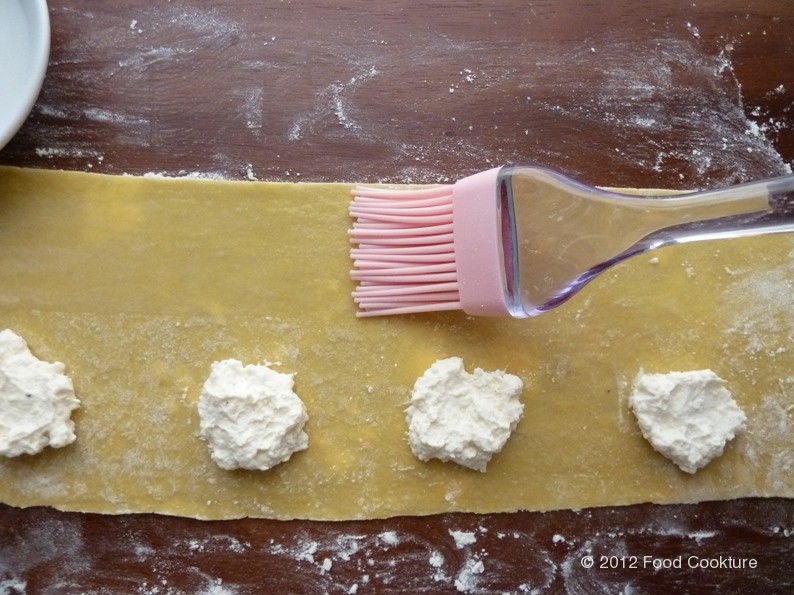
After making the fresh pasta (click here for fresh pasta dough recipe); roll the dough into a long rectangular shape. Spoon some filling onto the bottom half (as shown below) leaving enough room in between each spoonful of filling for cutting and allowing a border around each filling mound. Either brush water all over the dough before you spoon the filling or brush the water just on top part, and/or around the filling to allow the dough to stick together well.
Carefully fold the top half of the dough over (use both hands, one at each end) and close the dough edges together. Remove any air pockets by gently pressing your fingers around the filling.

Use a ravioli cutter or a knife to cut in between the filling pockets. Place the ravioli on a floured surface and set aside. Repeat with remaining dough and filling. The edges do not have to be perfect as the dough will expand when cooked in water and it will be barely noticeable. You can cook it right away, store it in the fridge for 2-3 days (covered with a dishtowel), or freeze it for 2-3 months (click here for pasta freezing tips).

Round-Shaped Ravioli (or any other shape using a cutter of your choice)

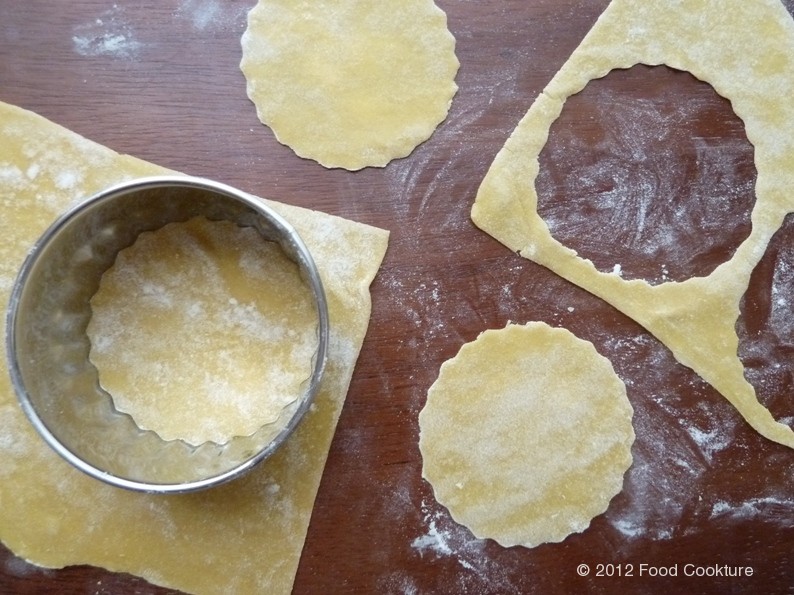
After making the fresh pasta (click here for fresh pasta dough recipe); roll the dough into thin sheets and use a round cutter (or a glass/cup/mug) to cut individual pieces of dough for the ravioli.
Brush half of the rounds with water to allow the dough to stick together well.
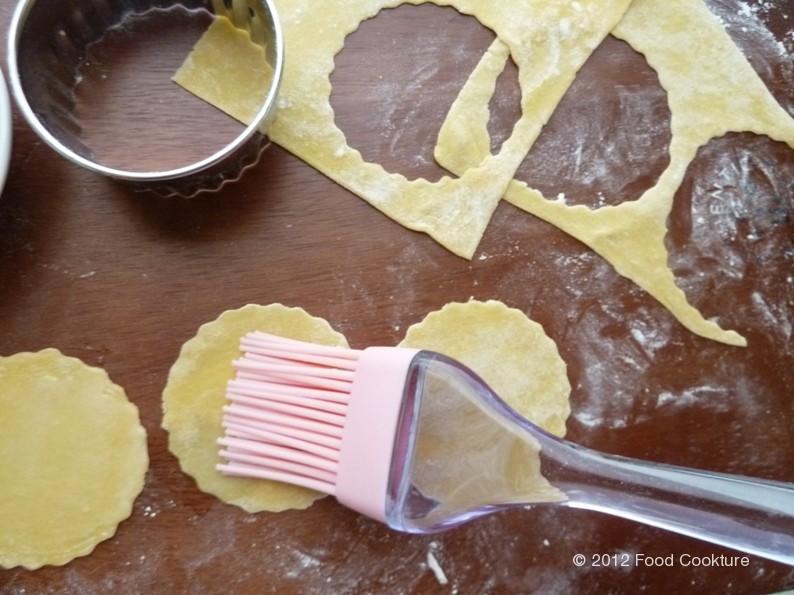
Spoon some filling onto one piece and top it with another round piece of dough.
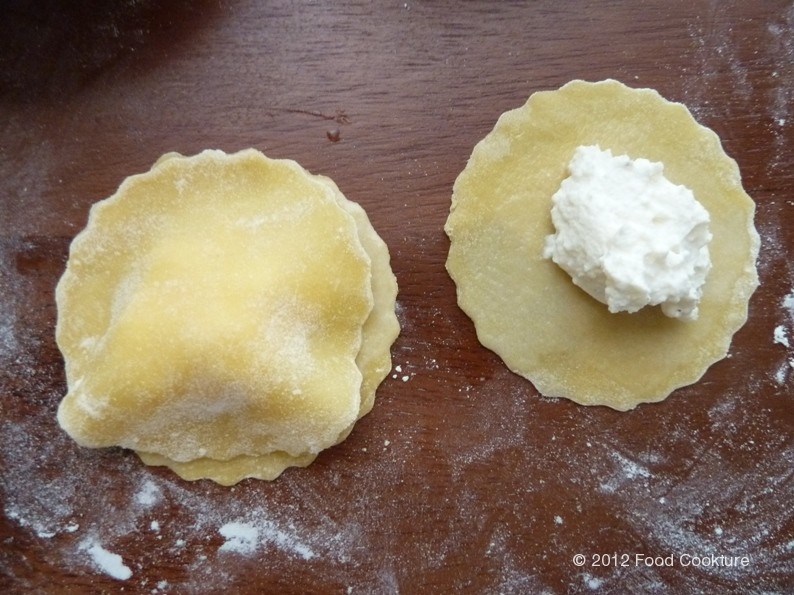
Press gently around the filling to make sure the dough closes all around.

Place the ravioli on a floured surface and set aside. Repeat with remaining dough and filling. You can cook it right away, store it in the fridge for 2-3 days (covered with a dishtowel), or freeze it for 2-3 months (click here for pasta freezing tips).

About this recipe
With this recipe I usually go by taste and don’t measure the ingredients for the ricotta filling, so the recipe I provide is an estimate. You can do the same or add any other ingredients you like. I will provide more ravioli fillings and combinations in later posts. Feel free to experiment with flavors and you will be amazed at how simple it is to create something spectacular with fresh ricotta and fresh pasta!
Ricotta Ravioli
Yields: If using fresh pasta dough that serves 5-6 people (click here for recipe) can yield approx 30-50 ravioli depending on shape and size.
Prep time: 20-30 minutes to make ravioli (depending on shape and using pre-made pasta dough and ricotta)
Cook time: 5-10 min

Ingredients

Ravioli:

Browned butter sage sauce:

  • 4-5 TBL (55-70 g butter)
  • Fresh sage leaves
  • Salt and pepper to taste
  • Dash of grated nutmeg (optional)

Directions:

  1. Combine the ricotta, parmesan, nutmeg, salt and pepper in a bowl, set aside.
  2. Follow instructions above for making and filling the ravioli.
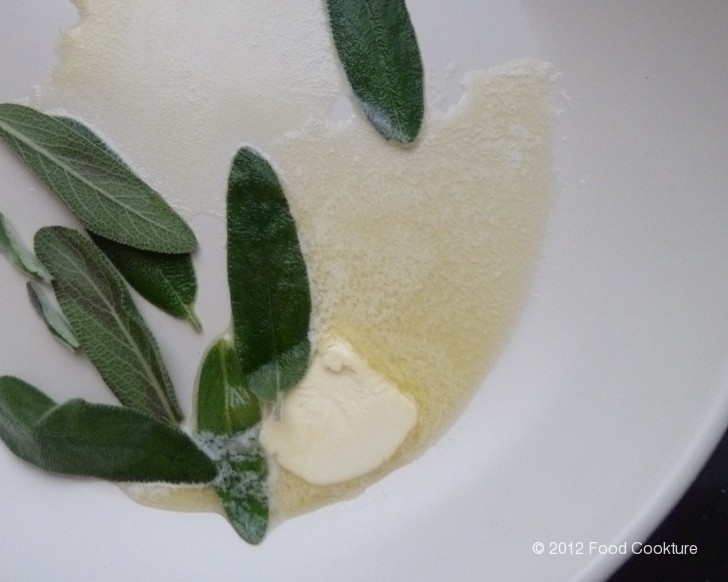
  3. Sauce: melt butter in large skillet with fresh sage leaves over medium heat. Add salt and pepper (and nutmeg) and allow the butter to turn slightly golden brown. The sauce is now ready, set aside.
  4. Boil water in a large pot.
    1. Note: I usually don’t add salt to my fresh pasta water since it has more flavor than dried pasta, and I already added salt to the dough.
  5. Carefully place the ravioli inside the pot (straight from the freezer if using frozen ravioli).  Do not put too many ravioli in the water at once; cook them in batches for them not to stick together and for the water temperature not to drop. The ravioli are done when they float to the top (usually 3 minutes). Carefully remove them and place them in the skillet with the browned butter sage sauce over low heat to warm the sauce and combine the flavors.

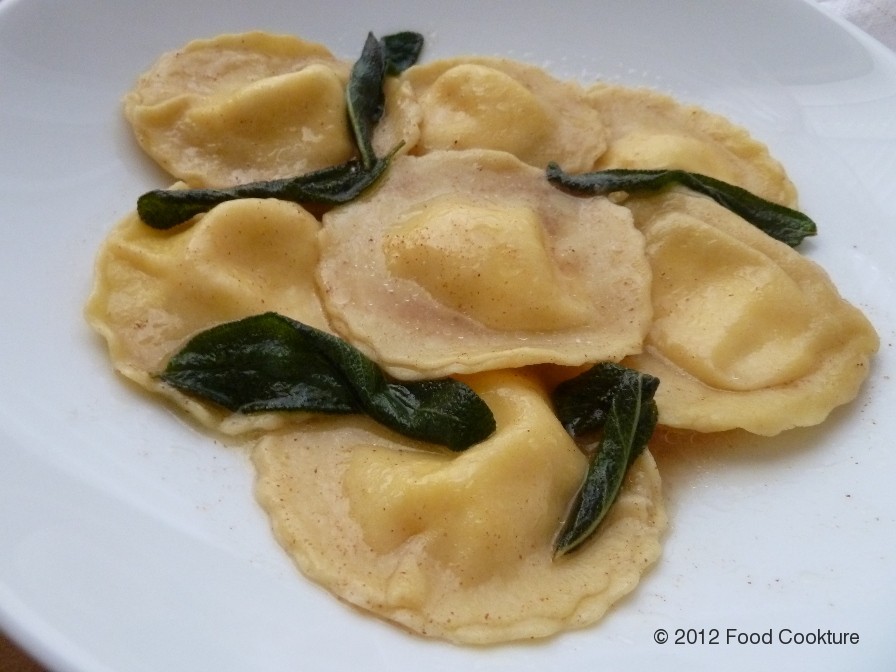
Plate the ravioli with some sage leaves. Sprinkle some parmesan cheese if you would like. Serve hot. I am sure you will enjoy this dish as much as I do, and hope it takes you to Italy each time you savor it! Buon appetito!

Posted in Entree (lunch/dinner), First Course, Pasta, Vegetarian | Tagged , , , , , , , , , , , , , , , , , , , , , , , | 2 Comments

Decadent Chocolate Drink & Food Blog Forum

Last weekend I attended the Food Blog Forum (FBF) in Orlando, Florida held at Walt Disney World. It is very hard to describe how amazing this experience was and how much I learned. This was my first food blog conference and I had high expectations given the list of presenters, the location, and the schedule of events. The FBF organizers and the Disney representatives did a phenomenal job planning receptions, meals, and organizing a VIP area of Epcot for us to watch the fireworks at night; it was truly special. The speakers were delightful and fun, the presentations and roundtables were informative and interesting. The people were incredible and we all felt a sense of community like no other event has ever given. I can honestly say this conference exceeded my expectations in every way!

One of the many highlights of the conference (besides that it was held at Walt Disney World!) was the food. Oh the food! Disney’s master chefs catered haute cuisine beyond what I could have imagined. Impressive presentations and creative combinations that were plated to be eaten with the eyes and bring even more happiness to our mouths. The chefs at Disney World Park and Resorts are some of the finest. Everything I tasted was amazing, unique and will be unforgettable.

Having a very sweet tooth, I’m always inclined to check out the dessert table before the savory ones… oh the danger at this event! At the welcome reception Friday night and at the lunch on Saturday I could not stay away from the dessert tables. It is very hard to pick a favorite, as I have many! But one in particular I don’t think gained enough attention at the at the welcome reception was a hot chocolate caramel drink. At first glance, it seemed simple and did not stand out next to the variety of more elaborate and creatively plated desserts. I even questioned why they would serve hot chocolate at an event being held outdoors at waterfront in the late yet hot afternoon with sun rays of approximately 85F/ 29C degrees beaming at us.

Since I never say no to chocolate, I took a first sip of this thick creamy chocolate caramel infusion to understand why it was at that table. It was not an average hot chocolate… It was far from actually being close to any chocolate drink that I have ever tried. It is the kind of drink that has you close your eyes and turn your lips slightly upward into a pleasurable smile before you can say “wow” to how good it is.

It was a velvety decadence of intense chocolate flavor combined with the rich sweetness of caramel. To those who have ever tasted “brigadeiro” (a Brazilian chocolate caramel sweet) this drink reminded me of what it is to drink brigadeiro! To those who haven’t yet tried I will provide a brigadeiro recipe soon!

About this recipe
I did not receive the recipe from the chef, so below is my attempt at recreating this marvel of a drink. Although I usually post a healthier and lighter version of recipes, this one by no means fits those categories. However, it is so rich you will want to have just a little, if you can manage to resist drinking it all! At the event it was served in shot glasses, here I serve them in espresso cups. You can enjoy it during any season and serve it hot or cold. I learned there is no such thing as a day too hot to have hot chocolate! So no matter how it’s served I’m sure you will enjoy it as much as we did.

Decadent Chocolate Drink / Hot Chocolate Caramel
Yields: approximately 20 servings of shot glasses/espresso cups

Ingredients:
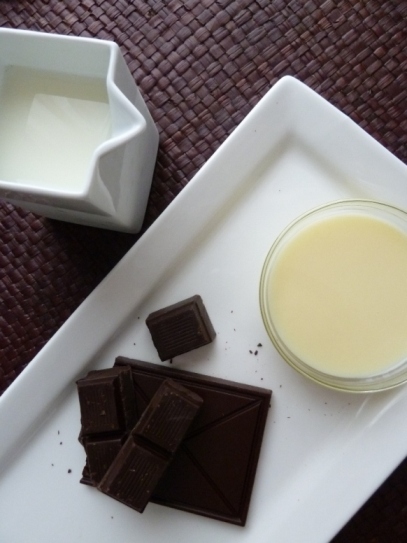
• 1 can (14 oz / 395 g) sweetened condensed milk
• 1 cup (250 ml) warm milk
• 21/2 oz (7 g) dark chocolate (at least 72-75% cocoa)
• 2 teaspoons of unsweetened cocoa powder (or you can just use 85-100% chocolate instead and omit the cocoa powder)

Directions
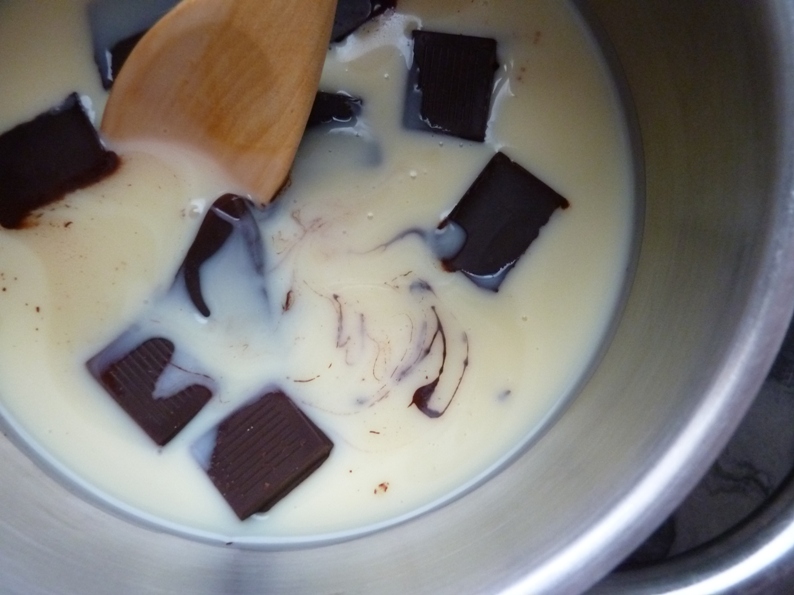
1. Combine the condensed milk and chocolate in a pan and stir over low-medium heat until the chocolate is dissolved and the mixture begins to thicken (approximately 4-5 minutes).
2. Add warm milk to the chocolate mixture and keep stirring for another minute or two. Taste and adjust sweetness to your liking; if using extra dark chocolate you may not need to add cocoa powder, otherwise add the unsweetened cocoa powder to cut the sweetness of the condensed milk.
3. Serve hot or cold in shot glasses or espresso cups.

This recipe can be kept refrigerated for up to 2 weeks… If you can resist! Enjoy!

Posted in Desserts, Drinks | Tagged , , , , , , , , , , , , , , | 7 Comments

Charity Baking Contest – I won 2nd place!!!

I recently entered the “Great American Bake Sale” charity baking contest organized by the non-profit Share Our Strength to raise funds to help end childhood hunger. The event took place at Le Cordon Bleu College of Culinary Arts in Atlanta in February 2012 and was judged by Tami Hardeman (food stylist/blogger from Running with Tweezers); Mary Moore (founder and owner of The Cook’s Warehouse),  Jennifer Turknett (Dining Team Member for The Atlanta Journal-Constitution), Gretchen George (chef-instructor in Le Cordon Bleu’s patisserie and baking program), and Charles Barrett (Executive Pastry Chef at A Legendary Event and the Professional category winner of GABC 2011). Entries were judged on taste (50%), presentation (25%), and originality (25%).

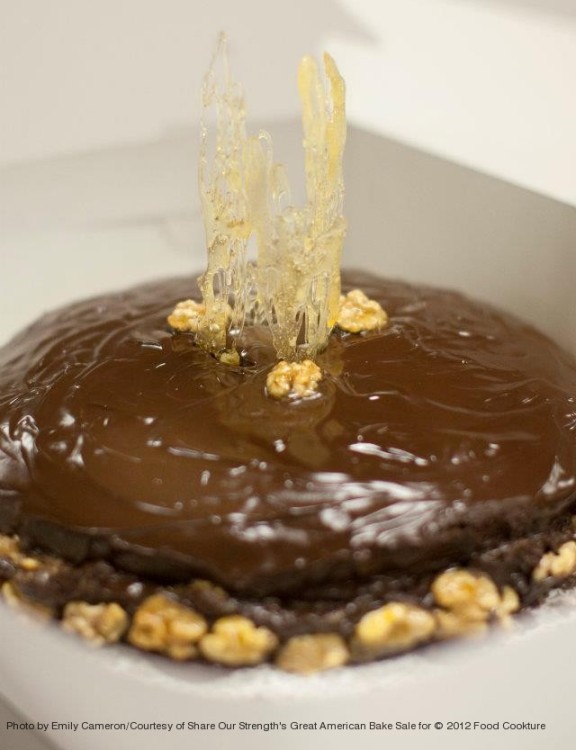
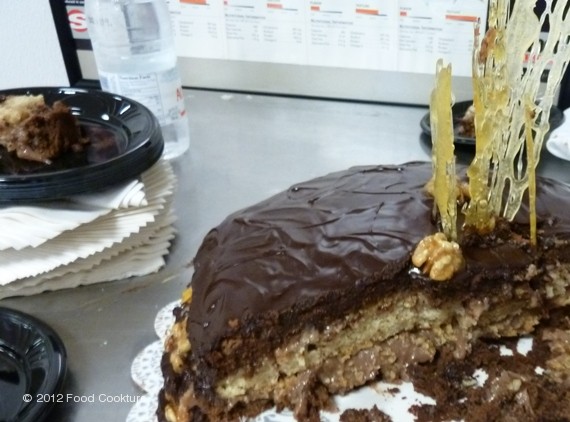
I decided to make an elegant three-layer caramelized walnut and chocolate cake. Within two weeks of the contest, I made three “test” cakes which were shared with family, friends and co-workers. The day before the contest I got started on the caramel decorations and the caramelized walnuts. It took 3 hours, 5 lbs (2.3 kg) of sugar, 5 pans, 12 forks, 7 spoons, and a lot of patience to make all the caramelized decorations and walnuts for my cake!

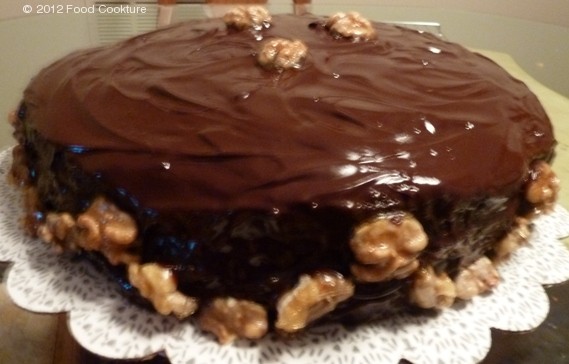
I made three different batches of caramelized walnuts: chopped walnuts for the middle layers of the cake, whole walnuts to decorate the sides as “jewels,” and walnut halves to create a chandelier effect connecting to the walnut “jewels.” The amber-color glass-like effect on the walnuts was beautiful. I was very happy and thought it was worth the effort and the time it took to make them; the burned sugar left on my stove-top however, is a different story. Caramelizing walnuts one at a time (so they don’t stick together) can be quite messy as threads of sugar caramel are created once you bring the walnut out of the pan with a fork. And if you are not careful, they break much like little pieces of glass all over your stove. Not fun to clean once burned (takes days by the way).

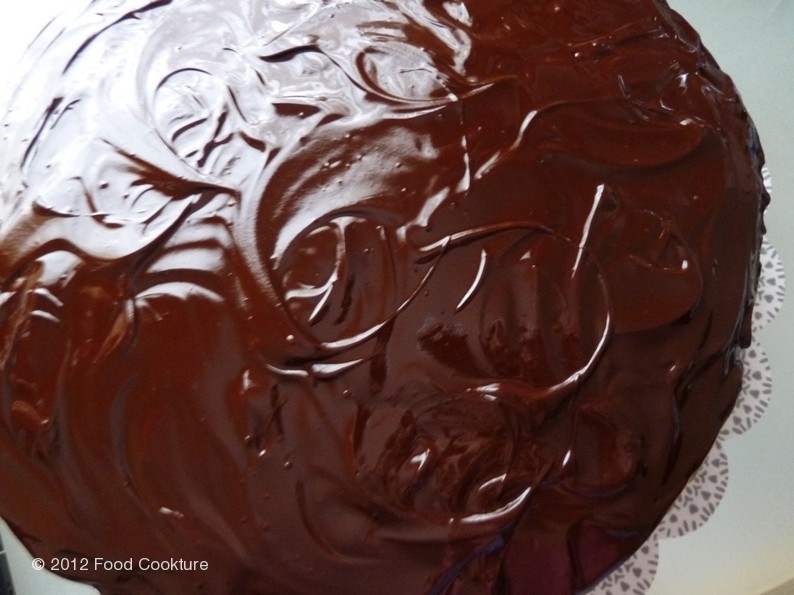
I then made a sumptuous chocolate cake for top and bottom layers and a rich walnut cake for the middle layer. Each chocolate layer was moistened with a chocolate sauce, whilst the walnut layer with a light citric simple-syrup. Each cake layer was topped with a silky and creamy chocolate caramel I made with condensed milk and crunchy pieces of the caramelized walnuts – which provided a wonderful contrast in texture and flavor. I then poured dark chocolate ganache to glaze the cake and decorated with caramelized walnuts to produce a chandelier effect. The last touch would be the standing caramel decorations on top of the cake (saved until I arrived to the event).

I then drove to Le Cordon Bleu in Atlanta. As I drove, a rush of feelings came over me: I was happy to have finished… exhausted to have worked for 8 hours over 2 days on the cake… thrilled to be a part of such an event… worried the cake would not arrive in one piece… anxious and hopeful the judges would like it. My heart was beating fast with excitement.

Once I arrived, eager to check my cake, I opened the box and my heart sunk: one-third of the top layer of the cake had shifted to the right; it slid off the cake covering the walnut decorations underneath it. I was able to see the layer of chocolate caramel with the pieces of caramelized walnuts – which at this point was only supposed to be seen once you CUT the cake. I took a deep breath, closed the box and without even thinking about what I had just seen, I took my cake inside.

I was in a state of shock and disbelief at what had happened, I’m amazed that I did not cry considering how tired and upset I was. I said to myself: 25% of the presentation points are gone, but I still have a 75% chance. I was betting on the fact that I trusted the cake to be delicious and hoped the judges would agree with me. I was glad at least the caramel decorations made it in one piece, so I could perhaps salvage some of the presentation points.

I entered, signed up, went to Le Cordon Bleu’s kitchen to drop off the cake.  Took another deep breath and had to figure out how to put that cake back in place. I held the left side of the platter with one hand, and tilted the box the cake was in with my right hand. Thankfully for the creamy chocolate caramel filling, it slid right back in place (just as I imagined how it slid out while I was driving!).

It was not the same cake I intended to present at a contest. My beautiful caramelized walnut chandelier had fallen into one big mess created by the chocolate avalanche engulfing part of the walnuts and the rest being shaken into one layer of clustered walnuts. It didn’t look terrible, but the sides looked messy. However I must admit, the cake still looked really yummy and I still wanted a big piece of it. Miraculously the top was unharmed and the chocolate ganache looked beautiful. I then placed the caramel decorations and the cake was exactly what I had envisioned it would look like, from the top anyways.

It was very hard for me to leave a cake for anyone else to see (not to mention culinary judges!) that was far from looking perfect. Until now when I look at the pictures I cringe because I remember how devastated I was at that moment, and what a shame it was the judges did not see the cake before I left my house!

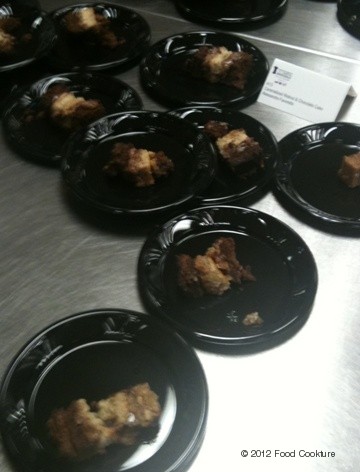
I then left the cake behind and went home. I returned later that evening for the contest. We were allowed to taste everyone’s cakes.  Of course I quickly walked to mine first to have a taste. It was delicious and exactly how I wanted it to be: moist, rich, and the chocolate caramel with the caramelized walnuts added a delightful decadence to the cake. I was very, very happy (at least with how it tasted) and received many compliments; including from the culinary pastry students who also commented on the standing caramel decorations – which made me very proud. It was a fun event but I had a little too much cake for one night.


We were then gathered as Jenn Hobby from Atlanta’s radio station Q100’s Bert Show was to announce the winners. I was so excited to be there not only as a participant, but also knowing I was part of a great charity event for a great cause – it was a nice fun way to raise funds for helping Share Our Strength’s fight for childhood hunger. Every second that went by from the moment we were gathered felt like a long minute. I had butterflies in my stomach and a nervous smile. I was so proud of myself and so confident my cake was delicious and beautiful (despite its non-perfect appearance) that during this entire time, I was really hopeful I would place top three. But something inside me told me I had an amazing cake, no matter what the judging outcome was.

They then announced the winners. I won 2nd place for the amateur category!!! I was SO happy to have won 2nd prize. I could not stop smiling all night!

I learned a lot from this contest. Besides the fact that next time I need to have someone else drive while I carry my cake, I learned that it’s always a great experience to challenge yourself; whether its entering a cooking contest or trying a new recipe you have never tried before. Believe me, the best reward is not a prize, but the fact that you pushed yourself to do something you never thought you would, and be happy and proud that you did, no matter what the outcome.

If a recipe does not turn out the way you expect it to, do not despair. Cooking is supposed to be fun and creative, so as long as what you make is edible, it’s all good.

Hope this inspires you to try something new in your kitchen and have a fun adventure with it!

Posted in Cakes, Desserts, News & Events | 8 Comments

Easy Homemade Puff Pastry

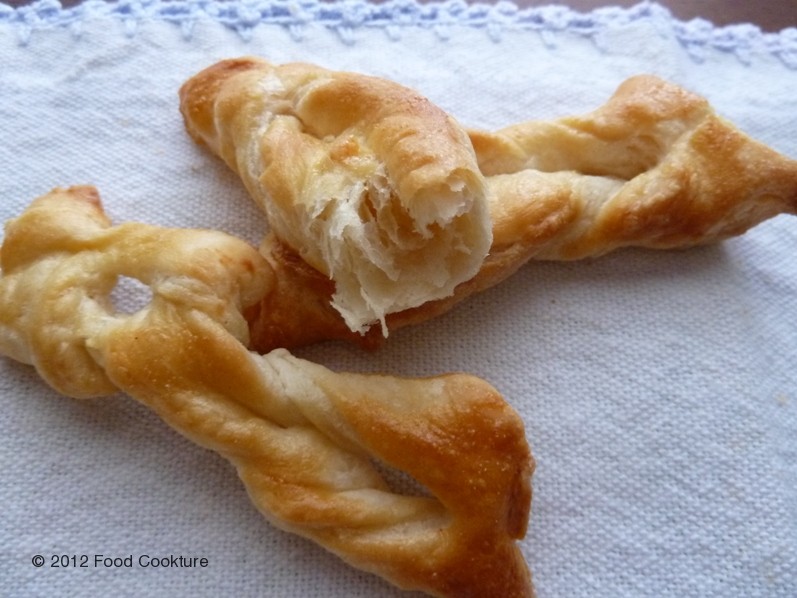
Puff pastry – or pâte feuilletée (which means pastry of many layers, or “leafs” in French) can be used in sweet and savory dishes enhancing them with its flaky layers and rich buttery flavor. There are two methods for making puff pastry: the traditional recipe which starts with a small batch of dough and folds a block of butter into it, and the simpler “rough pastry” which works pieces of butter into the flour to form the dough. The rough puff pastry produces very similar flaky results to the traditional recipe, and requires less labor and time.

Contrary to popular belief, this dough is quite easy to make. I have not bought pastry dough ever since I started making my own. My recipe takes less time to make than to thaw the store-bough frozen pastry. For those who are fortunate to find fresh pastry dough, the benefit of making your own is that you can (substantially) decrease the amount of butter, while still obtaining a flaky and crisp pastry. But the main reason I make my own is that it tastes fresh and SO much better. This recipe can be stored in the refrigerator (for 2 days) or in the freezer (I would recommend to freeze no more than 2-3 months). You can use puff pastry to make tarts, strudel, cookies, and delicate pastries. You will delight yourself in the little effort it takes to make your very own!

About this recipe
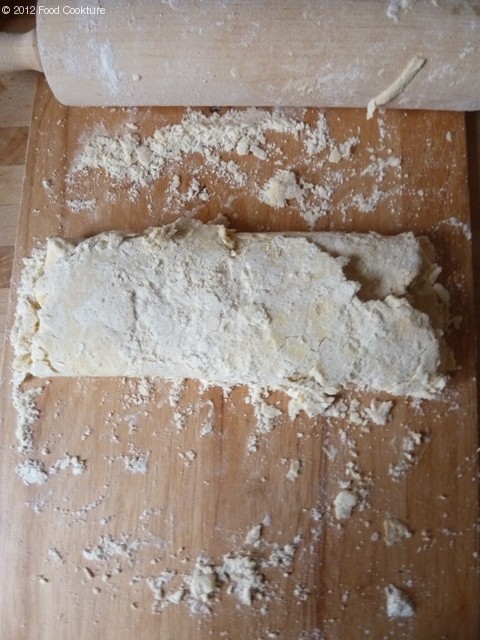
I once made the traditional recipe with my mother and was in shock at the amount of butter used. What gives the pastry its many layers is the process of how the dough is folded, not necessarily how much butter is used. Of course the butter gives the pastry its richness and flaky layers, but you can still achieve the “puff” effect using less of it. The traditional recipe my mother makes has a ratio of 1:1 flour to butter (gasp! I didn’t eat puff pastry for a while after I discovered that). I have tried many versions of her recipe decreasing the butter as much as possible and acquiring the simpler “rough pastry” method. You can always increase the amount of butter if you wish; but I don’t think you will find the need. The flavor of this recipe is very similar to the original and you still get the dough to puff; while saving on lots of buttery calories in the process. I provide a step-by-step photo illustrated guide on how to roll the pastry so you can see how easy it is to make it. I have also cut the resting time achieving the same desired effect.

Easy Homemade Puff Pastry
Yields enough for two dough pieces of approximately 12x10in (30cm x 25cm) in size
Prep time: 20 min + resting time (at least 30min)

Ingredients:

  • 1 3/4 cups (250g) flour
  • 11 TBL (155g) unsalted butter (you can even use as little as 8 TBL (115g) for even lighter pastry but it will be a little flatter, which is ok for tarts)
  • Pinch of salt
  • 10-12 TBL ice-cold water (start with 10 TBL, depending on the flour, you may need to add another tablespoon or two)
  • *plus 1 egg for the egg wash before baking (see note below)

Directions

  1. Sift flour and salt in a bowl. Add the ice water to the flour mixture.
  2. Cut butter into small cubes and add to the flour mixture using a pastry blender (or a food processor) cut through the butter into the flour. You should still have little pieces of butter
    1. Note: If you do not have a pastry blender or a food processor, you can use a fork to cut through the butter in the flour. Avoid using your hands so the butter remains cold.
  3. Once you obtain somewhat of a dough mixture (the dough will get smoother once you roll it), transfer to a lightly floured surface.
  4. Using a rolling pin, start rolling the dough while bringing lose pieces of flour and butter into the mixture.
    1. Note: Flour the rolling pin often so the butter does not stick to it while you roll the dough.
  5. Important Note: The butter will get softer and blend into the dough the more your roll (during the steps below). If working in a warm kitchen or you notice the butter melting while you roll the dough, put the dough in the refrigerator for 5-10 minutes before continuing to work with it. A good tip if your kitchen is warm and you do not want to keep putting the dough in the fridge is to roll the dough on a cold surface (you can put a tray or marble/wood board in the freezer or refrigerator, then place a piece of plastic wrap or parchment paper over the chilled tray and roll the dough over it).

Making the Puff Pastry

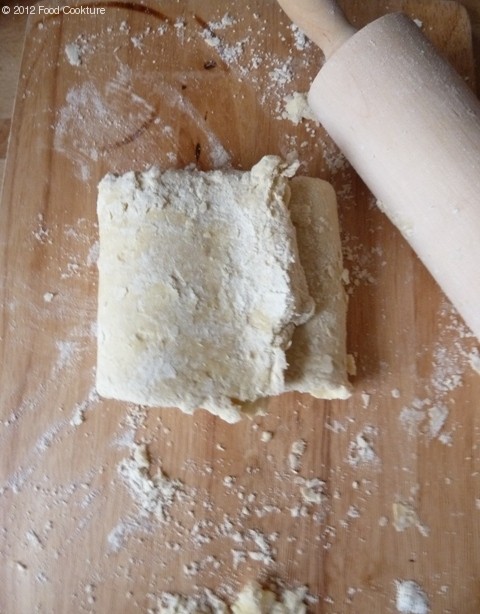
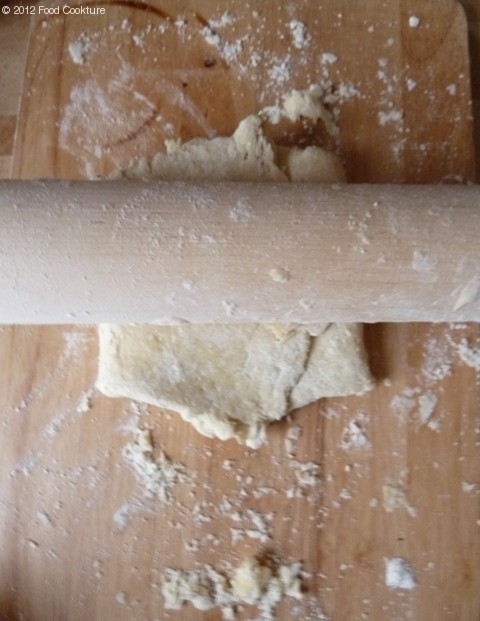
STEP 1: Once you obtain a somewhat smooth surface, roll the pastry to a rectangular shape. You will fold the pastry into thirds (similar to folding a letter to be placed in an envelope). First fold the top third over the middle of the pastry. Then fold the bottom third over that piece. Now rotate the folded pastry a ¼ turn to the right (so the folds are now vertical/perpendicular to you and not horizontal/parallel).

STEP 2: Roll the folded dough until obtaining a rectangular shape as above. Repeat folding steps: fold top third over the dough, then fold bottom third over that piece. Rotate the folded pastry a ¼ turn (always rotate in the same direction). The dough becomes smoother with each rolling and folding step.

STEP 3: Repeat the folding and rolling step above 2 more times (for a total of 4 times). Wrap dough with plastic wrap and let it rest in the fridge for at least 30 minutes (up to 2 days, whenever you need to use it. You can freeze the dough at this point and thaw it at room temperature before proceeding with steps below).

Remove from fridge (or thaw it from freezer) and repeat the folding and rolling step above 2 more times.

Roll dough to a thin pastry (1/4 inch/3 mm) – not too thin or you can compromise how much it will rise. The dough is now ready to be used!

Using the Puff Pastry

  1. You can shape the dough into any shape, or roll it out into a rectangle and cut it into small squares.
  2. *For the puff pastry to obtain its golden color and shiny surface, you need to brush it with an egg wash before baking.
    1. Note: An “egg wash” is simply a beaten egg to be brushed over the dough to give its golden color. My mother makes her egg wash with the egg yolk and a little bit of milk or a little bit of water. Sometimes I use the entire egg and not add any milk or water.
  3. For simplicity, if you are making a tart, you can brush the egg wash over the entire surface and then add the topping of your choice; or just brush the egg wash over the borders. If using the puff pastry to be folded (such as in making strudel or croissant), just brush the egg wash over the top surface before baking.
  4. If using puff pastry for a tart recipe, make sure you pierce the pastry with a fork or knife so it does not puff unevenly while baking. I usually make little “X” shapes for my tartlets so the dough doesn’t puff at all in the middle, just around the borders.
  5. When ready to bake, pre-heat oven to 400°F (200°C) and only put the pastry in once the oven has reached that temperature. Do not open the oven door until the pastry is golden brown and ready to be removed from the oven; otherwise the pastry may not reach it’s full “puff” potential.  Depending what you are using the pastry for, usually 10 minutes is enough time to get a nice golden color – pay attention to the oven as you do not want to burn your pastry!

I hope you enjoy this recipe and see many uses for it. Now that you see how simple it is to make puff pastry at home (and once you taste how delicious it is), I hope you make it often! Enjoy!

Posted in Appetizers, Breads, Brunch/Breakfast, Desserts, Side Dishes, Snacks, Vegetarian | Tagged , , , , , , , , , , , , , , | 14 Comments

Minestrone

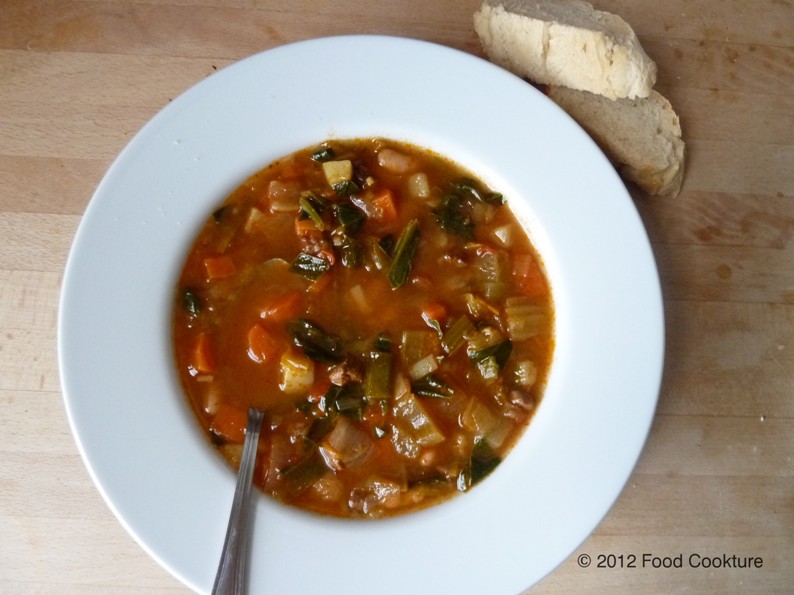
Minestrone is an Italian soup which usually consists of seasonal vegetables and sometimes the addition of pasta, rice, and/or beef. This is one of my favorite soups. It’s hearty, healthy and the best comfort food on a cold night. It’s a great one-dish nutritious meal and quite simple to make. Depending on the ingredients you choose it can be made in 30 minutes. The best thing about minestrone is that there is no “set” recipe – you can be as creative as you like.

About this recipe
My minestrone recipe changes all the time depending on the ingredients I have at home. My “base” usually consists of onions, carrots, celery, white beans, and beef. I like to make my minestrone nutritious by combining seasonal vegetables of different colors and always adding beef for protein. It is how my grandmother and my mother have always made it, and this recipe always reminds me of their soup, so I stay with their “base” and change vegetables once in a while. My mother usually adds pasta to her minestrone, which sometimes I do too. I like to use dried beans and cook the soup for a while when I have time; however, most often than not I use organic canned white beans if I want to make this soup quickly (read the label and make sure you use canned beans with no preservatives -only water and salt should be added to canned food). I also add spinach and sometimes kale (at the end) for an extra boost of color and nutrition.

Feel free to modify this recipe as you please. If you would like to make the recipe vegetarian, just omit the beef. Be mindful that the more vegetables you add, you may need to adjust the quantity of water and broth (or bouillon). Have fun experimenting with different ingredients and enjoy!

Minestrone
Yields: 4-6 servings
Prep time: approx 10 min
Cook time: approx 30-40 min

Ingredients:

  • 1 lb (1/2 kg) beef/red meat of your choice, cubed
  • 2 TBL olive oil
  • 1 medium onion, chopped
  • 2 celery sticks, chopped
  • 2 medium carrots, chopped
  • 1 leek, chopped (wash well beforehand)
  • 1 zucchini, cubed
  • 1 medium potato, peeled and cubed
  • 1 can cannellini beans, rinsed (or use dried beans – see note below)
  • 1 medium tomato, chopped
  • 1 TBL tomato paste
  • 3 cups of vegetable broth (or 2 bouillon cubes with 3 cups of water)
  • Water (enough to cover vegetables for a lighter soup, or add more broth)
  • Salt and pepper (to taste)
  • 1 sprig of fresh rosemary and thyme (optional)
  • Spinach, chopped (as much as you please)

Note: If using dried beans, soak them overnight and follow instructions on package for cooking them. Soup may take 1- 2 hrs to cook depending on the dried beans used.

Directions:

  1. Add the olive oil and the cubed pieces of beef to a pot on medium-high heat. Cook through until the beef turns golden brown, approx 5-8 minutes. Season with a little bit of salt and pepper.
    1. Note: Use very little salt here just to season the beef; you will be adding broth/bouillon later and adjusting the salt.
  2. Lower heat to medium and add onions, celery, and carrots and leek and stir constantly (if the pot browned while cooking the beef, scrape the bottom of the pot while stirring the vegetables to release extra flavor), approx 5 minutes.
  3. Once onions have started becoming translucent, add the zucchini, potato, beans, tomato and the tomato paste to the pot.
  4. Immediately add the vegetable broth (or the water and bouillon mixture). Depending on the size of the pot, you may need extra water (or broth) to cover the vegetables; if so, adjust seasoning accordingly. Add salt and pepper to taste. If adding a fresh sprig of rosemary and thyme, you can add them at this time.
  5. You can increase the temperature to medium-high and let the soup come to a boil. Immediately, lower heat to simmer and cook with the pot covered (letting a little steam escape from one side) for another 20-30 minutes (until the potato is cooked through and soft). Stir once in a while. You can cook the soup longer for more flavor if you prefer.
  6. Before serving, add the chopped spinach to the pot of soup and stir.
    1. Note: Adding the spinach at the end allows it to retain its dark green color and not wilt during cooking.

Serve this soup with a few slices of rustic bread and a sprinkle of fresh parmesan cheese. I hope you enjoy it!

Bom Apetite!

Posted in First Course, Light Dishes, Soups, Vegetarian | Tagged , , , , , , | Leave a comment