Spaghetti Cacio e Pepe

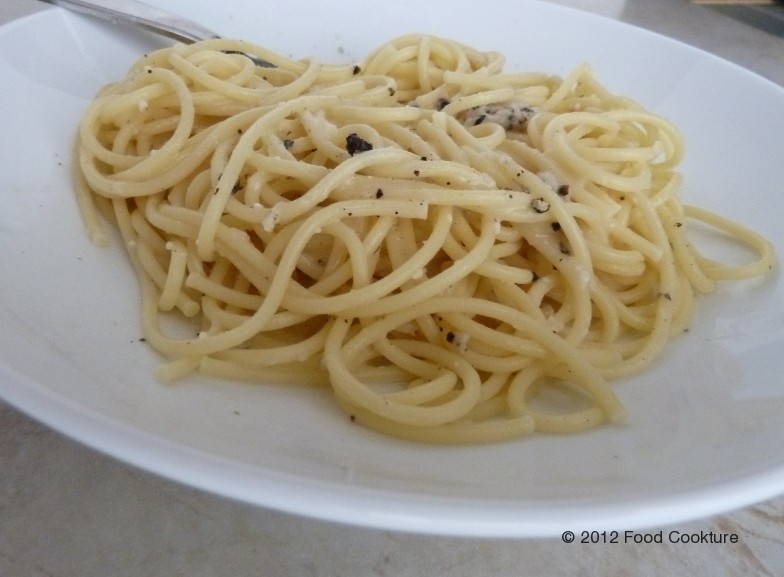
Spaghetti cacio e pepe’s simplicity will surprise you. Its sauce, as the name suggests, is made only with cacio (cheese), pepe (black pepper), and the addition of pasta water to make it creamy. I first saw this pasta recipe when watching Anthony Bourdain’s television show No Reservations when he visited Rome, Italy. As soon as the episode was over I was in my kitchen making my own version of spaghetti cacio e pepe. Fortunately I always have a variety of cheeses at home (one of my addictions) and Pecorino Romano happens to be one of them. I immediately made myself a serving and was delighted by the minimalism of the dish and amazed at the intensity of flavors created by only two ingredients. The cheese combined with the hot starchy pasta water produces a light creamy sauce without the need to add cream, butter or oil. The freshly crushed black peppercorns give a wonderful aroma and also provide some earthy heat to the dish.
Ideally, if you can find it, the recipe is named after “Cacio di Roma” which is a semi-firm textured cheese from the region of Lazio, Italy. But Pecorino Romano is a perfect substitute.

About this recipe
Some recipes use additional butter and/or olive oil, but I don’t see a need and would rather make this dish lighter without them. I also don’t add extra salt since the Pecorino Romano cheese has just enough to offer the dish. Be prepared to get addicted, it is delicious and is made in less time than it takes to cook the spaghetti. Plus, this is probably the easiest pasta you will ever make and I’m sure will also become one of your favorites.

Spaghetti Cacio e Pepe
Serves 3-4 people
Prep time: 5 minutes
Cook time: 8 minutes

Ingredients:

  • 8oz (225g) of dried spaghetti
  • 9 Tablespoons* (approximately ½ cup) of grated Pecorino Romano cheese (or Cacio di Roma cheese if you can find it; best to freshly grate it, but you can also use store-bought grated cheese)
  • 1 Tablespoon* of fresh whole black peppercorns (you can reduce the amount of pepper used; if using ground fresh pepper, use 1/2 Tablespoon, or less)
  • 1 cup* of hot pasta water (allow pasta to cook for at least 5-6 min before using the water to make sure it has enough starch)
  • 1 teaspoon of salt (for pasta water)

*NOTE: These are approximate amounts. I must admit, when I make this recipe I sometimes change the proportion listed here. Sometimes I want more cheese, other times more pepper. So feel free to taste and add more as you go. You can add a bit more of each after you toss the pasta together.

Directions

  1. Cook spaghetti in boiling water with salt for 8 minutes until al dente (cook 1 minute under the package instructions for “al dente” pasta). Wait until water reaches a rolling boil before placing pasta for it not to stick together.
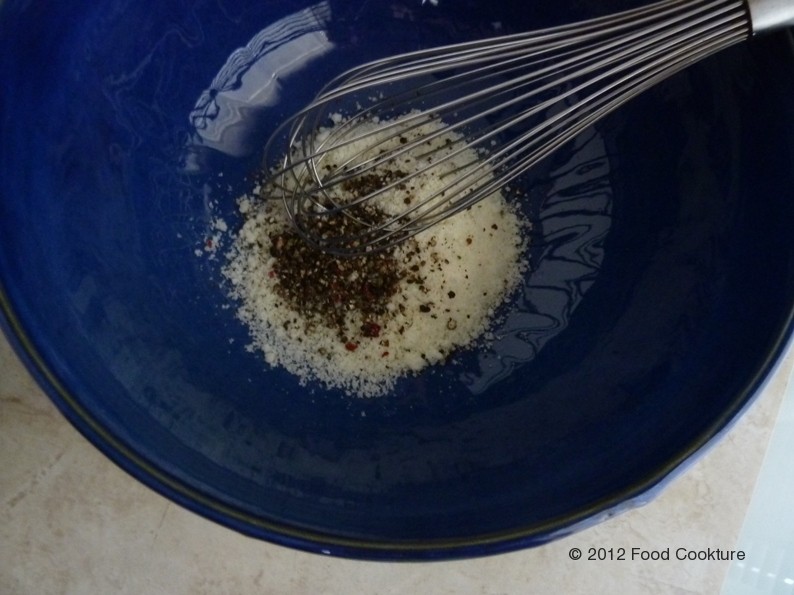
  2. Grate the cheese and set aside in a bowl.
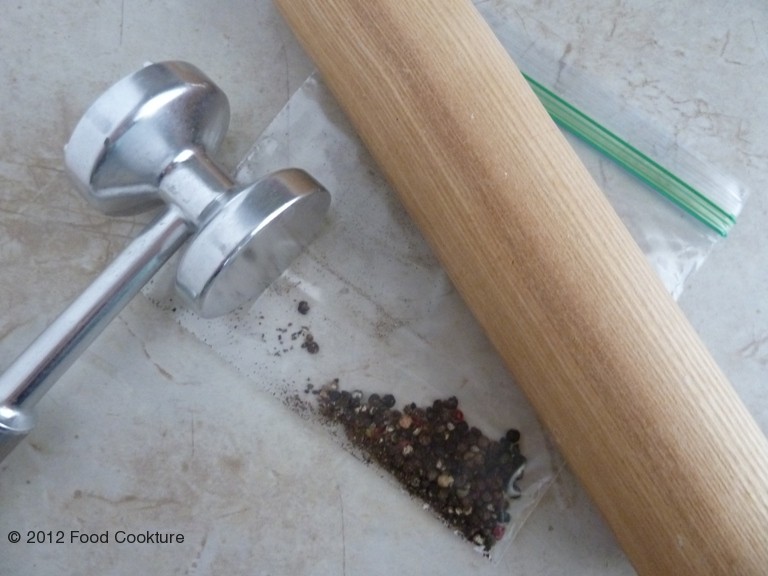
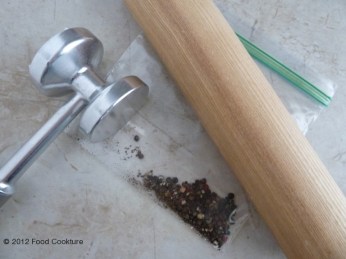
  3. Crush the black peppercorn using a mortar and pestle, or place peppercorns in a small plastic bag and crush using rolling pin (roll over peppercorns) or a meat tenderizer (make sure to use a cutting board or protective surface underneath). The crushed peppercorns might pierce through the bag, so you can also cover the bag with a dish towel.  Place the crushed peppercorns in the same bowl with the grated cheese.   
                             
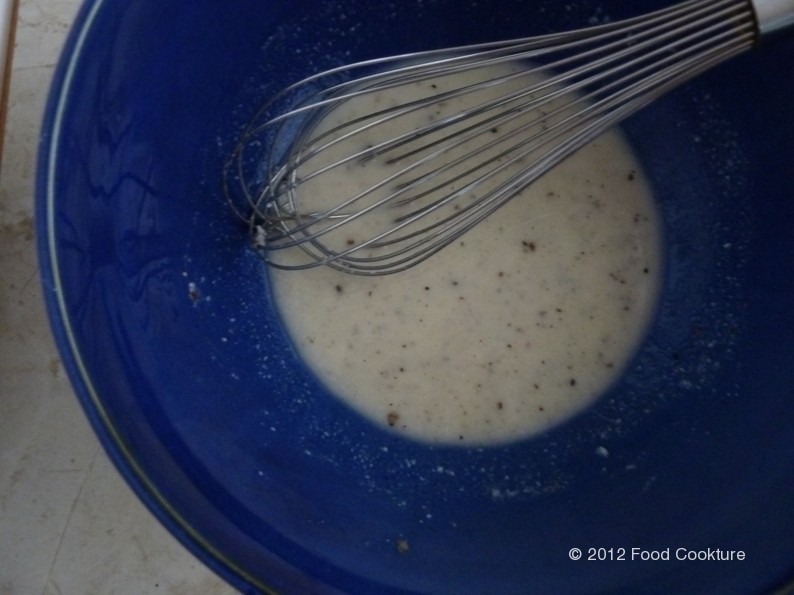
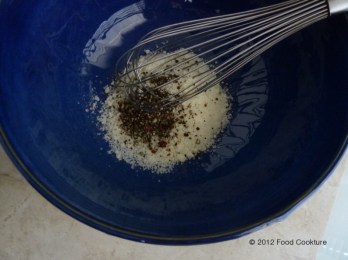
  4. After cooking the pasta for approximately 5-6 minutes (when the water is no longer clear); add approximately 1 cup of the pasta water to the bowl with cheese and pepper and whisk until a creamy sauce is formed. This is your “cacio e pepe” sauce.
  5. Once the pasta is cooked, drain pasta (reserving the pasta water in case more is needed for the sauce).
  6. Add the pasta to the bowl with the cacio e pepe sauce and toss until the pasta is well coated with the sauce. Add more pasta water if needed and more cheese and/or pepper to your liking and toss again.
  7. Serve immediately.

I hope you enjoy one of my favorite (and fastest) pasta recipes!

Posted in Entree (lunch/dinner), First Course, Pasta, Vegetarian | Tagged , , , , , , , , , , , , , , , , , , , , | 5 Comments

Simple Dessert: Pineapple with Lemon-Lime Zest & Mint

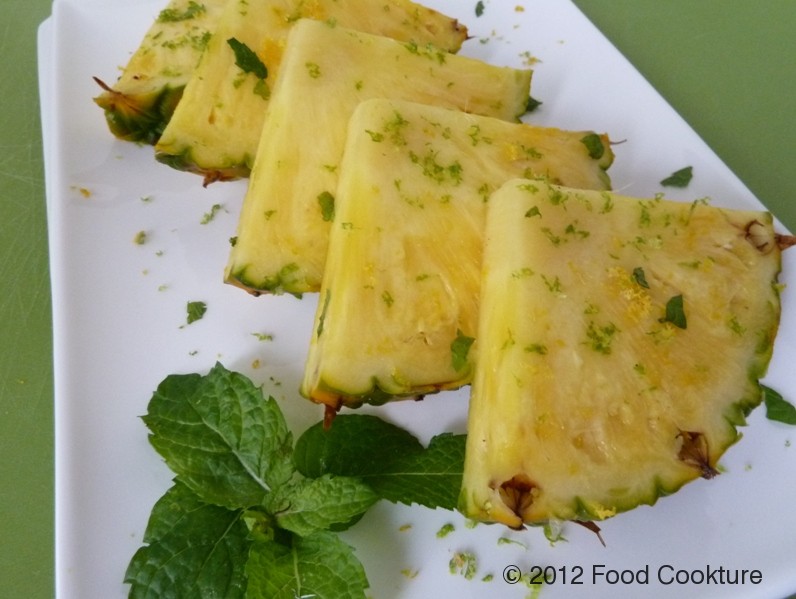
Pineapple makes a great dessert. It is sweet without being too sweet and has a nice presentation on its own without the need to dress it up. This tropical fruit has digestive properties which makes it a healthy and simple option to serve after a meal. Pineapples contain “bromelain” which is an enzyme that helps break down protein and aid with digestion. It is also a great source of soluble fiber which helps improve digestion by slowing down absorption and allowing your body to absorb the nutrients from your meal. Pinapples are rich in Vitamin C (providing 130% of the daily value per cup serving) and manganese (75% of the daily value per cup serving). However, be cautious that too much of a good thing can have the opposite effect and lead to gastrointestinal distress; so eat in moderation and don’t go overboard with the good news about this fruit.

About this recipe
It is very common in Brazil to eat pinapple slices with lime zest after a meal. This recipe is a simple way to serve this wonderful fruit as a dessert. I usually have both lime and lemons at home and decided to use the zest of both; since they offer different flavors and the lemon balances the lime with a sweet touch. I also like to add mint since its flavor is long known to have a great relationship with pineapples. You can sprinkle the mint on top or just add it to the side to eat with the pineapple slices. This is a fast dessert to make and its effortless presentation is quite beautiful.

Pineapple with Lemon-Lime Zest & Mint
Serving: ½ to 1 slice per person
Prep time: 5 minutes
Cook time: none

Ingredients:

  • Pineapple slices (1/2 to 1 slice per person)
  • 1 lemon (zest only)
  • 1 lime (zest only)
  • Fresh mint

Directions

  1. Cut the pineapple in slices. You may quarter the slices (as pictured) for a more delicate presentation and smaller servings. Plate the slices.
  2. Zest a bit of the lemon and lime over the pineapple slices.
  3. Chop fresh mint leaves and sprinkle on top.
  4. Serve immediately or leave in the fridge until ready to serve.

Serve as a healthy dessert or a light and refreshing snack.  I hope you enjoy!

Posted in Appetizers, Brunch/Breakfast, Desserts, Healthy Cookture, Light Dishes, Snacks, Vegetarian | Tagged , , , , , , , , , , , , , , , , , , , , , , , , , , , , , , , , , , , , , , | Leave a comment

Banana Bread (Low Fat)

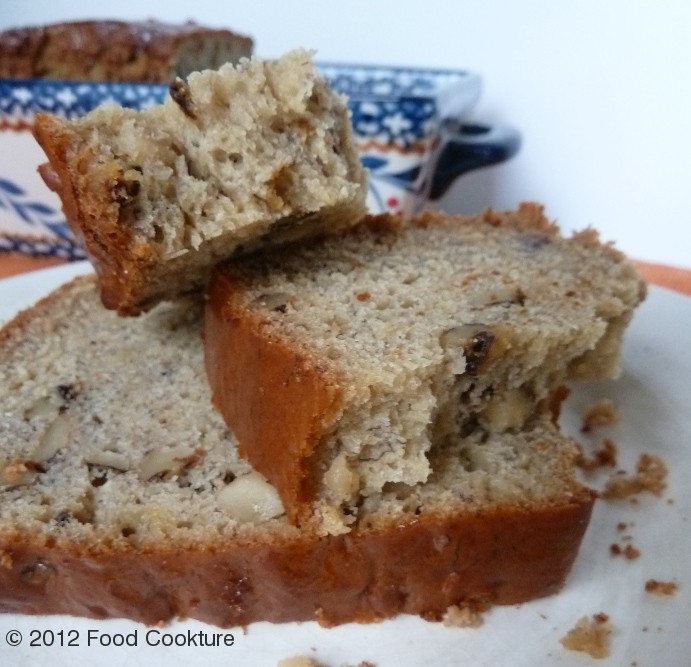
Every family has a favorite recipe for banana bread that goes back generations. A slice of moist banana bread always reminds me of home. As a young child, I remember my mother mashing bananas and sprinkling oatmeal and drizzling honey on top for me to eat. Until today, bananas (especially mashed with oatmeal and honey) are one of my favorite snacks or breakfast foods. When there are no more bananas in my kitchen, I know it’s time to go food shopping (whether I really need to or not). Banana bread is the first thing I think of when my bananas are turning slightly brown and becoming extra sweet.

If you don’t have time to make this recipe when your bananas are calling to be used, you can store the ripened bananas in a plastic bag and freeze them until ready to make the bread (thaw them first before using). They will also survive an extra day or two in the refrigerator. Likewise, if your bananas are not “banana bread ready,” there’s a little trick I share (read below) to make them at least a little sweeter and ready for baking.

About this recipe
This recipe is adapted from nutrition expert Manuel Villacorta’s “Applesauce Agave Banana Bread” that he shares in his new book The Carb-Friendly Way to Lose Inches, Embrace Your Hunger, and Keep the Weight Off for Good. (Click here for more information on the book and a chance for Food Cookture readers to win a free book or a free gift with purchase!). I added walnuts to the recipe because I really like the crunch of the walnuts and feel its earthy flavor compliments the banana’s sweet and delicate nature. I like that this recipe uses agave nectar instead of sugar; the former is a syrup made from the agave plant, it’s a great substitute for sugar or honey. I used less agave nectar than the original recipe because I decided to heat the bananas slightly before mixing with other ingredients to bring out their natural sweetness and juices.

As Manuel points out in his book, agave has a lower glycemic index than sugar so it browns sooner (the original recipe is baked at 325°F/160°C for 1 hour, I wanted to try baking it slightly faster – but had to cover the bread half-way through with aluminum foil so it didn’t burn on the outside while the inside was not fully cooked). I slightly modified the amount of salt and baking powder based on my own recipes. Using apple sauce is a low-fat trick I use in other recipes as well (click here for my Low-fat Apple Cake). Apple sauce is a terrific substitute for oil in cake recipes; it does not alter the flavor and provides so much moisture to the cake, you won’t believe there is no oil!

A little nutrition
The glycemic index (GI) is a measure of the effects of ingested carbohydrates on blood sugar levels. It can vary from person to person and on the condition of the food item itself. Cooking the banana to make it sweeter (as I did for this recipe) slightly increases the banana’s GI. However, I rather use the fruit’s natural sweetness (even if the GI is slightly increased) than adding sweetening agents such as sugar to make the cake sweeter. Agave nectar has a lower GI than honey and sugar, which makes it a great substitute in some recipes.

Banana Bread (Low fat)
Yields 14-16 servings (using a 9-inch (23cm) x 5-inch (13cm) loaf pan)
Prep time: 10 minutes
Cook time: 40-45 minutes
Cooking Temperature: 350°F/180°C

Ingredients:

  • 3 medium bananas, ripe (peel should be slightly brown; or microwave for 60 seconds)
  • ¼ (60ml) cup agave nectar
  • ½ cup (120ml) organic unsweetened apple sauce* (for homemade recipe see below)
  • 2 large eggs
  • 1 tsp vanilla extract
  • 2 cups of all-purpose flour
  • ½ tablespoon of baking powder
  • 1 teaspoon of baking soda
  • ½ teaspoon of salt
  • ½ cup (60g) of walnuts (optional)
  • Powdered sugar (optional)

*Note: You can use unsweetened (preferably organic) store-bought apple sauce (which is what I used) or simply make your own! For a simple homemade apple sauce: combine chopped peeled apples (use sweet apples so you do not have to add sugar) into a pot of water (use enough water to cover the apples; you can also cook apples with just a little bit of water for more flavor. Cover with lid, cook on medium-high until water boils, lower temperature to medium until the apples are soft and cooked. Put cooked apples in food processor, allow to cool and it is ready to be used.

Directions

  1. Preheat oven to 350°F/180°C. Butter and flour baking pan(s) and set aside.
  2. Mash bananas and add agave nectar and set aside.
    1. Note: If banana peel is not brown, you can sweeten the bananas by removing peel and slicing them and placing in the microwave for 60 seconds; allow bananas to cool before using in this recipe.
  3. In a mixer, combine bananas, agave nectar, apple sauce and eggs and mix well.
  4. Add baking soda, salt, and flour; mix well.
  5. With a spatula, slowly mix the baking powder into the mixture and add walnuts.
  6. Slowly pour mixture into baking loaf pan.
  7. Bake for approximately 20-25 minutes then cover with aluminum foil not to burn the top of the banana bread while it continues to bake. Bake for another 20 minutes until dark golden brown. Test by inserting a toothpick in the cake and it should come out clean.
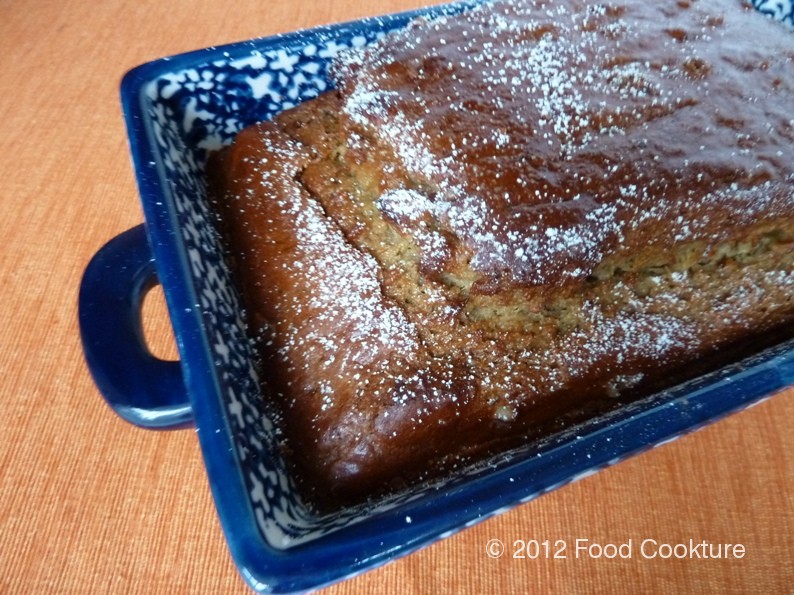
  8. Once cooled, sprinkle powdered sugar (optional) and serve.

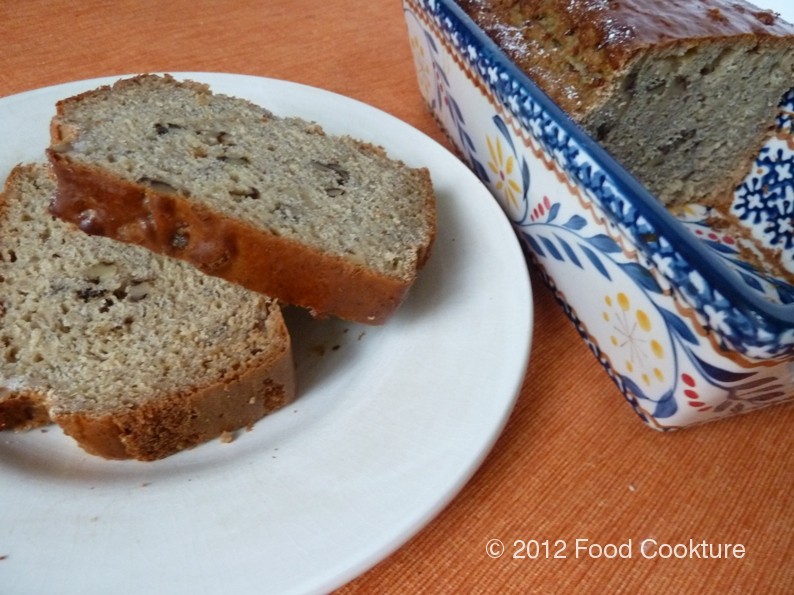
This healthy banana bread recipe tastes so good you won’t be able to tell it is low in fat and sugar! I hope you enjoy!

Posted in Breads, Brunch/Breakfast, Cakes, Desserts, Healthy Cookture, Snacks, Vegetarian | Tagged , , , , , , , , , , , , , , , , , , , , , | 5 Comments

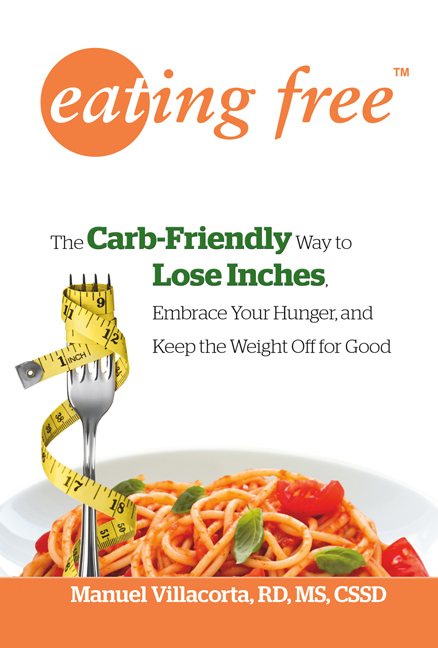
Nutrition & Healthy Weight Loss Book Giveaway & Review

I have to admit I almost always approach diet or weight loss books with great caution because most of them tell you to deprive yourself of substantial nutrition (by avoiding carbs) or limiting food intake. What upsets me the most is that the majority of these books are even written by doctors, nutritionists or dieticians to claim their credibility. The problem? Most of these proposed diets work short-term (and some should only be followed for a brief period not to have harmful consequences to your health) and they don’t teach you about nutrition, how to healthfully lose weight, or how to maintain a healthy lifestyle after you lose the undesired weight.

I’m pleased to say Manuel Villacorta’s new book The Carb-Friendly Way to Lose Inches, Embrace Your Hunger, and Keep the Weight Off for Good is refreshingly different from most weight loss books. He focuses on weight loss and weight management in a simple way by incorporating basic nutritional elements and teaches you to follow healthy lifestyle principles anyone can adhere to. 

Who is Manuel Villacorta
Manuel Villacorta, RD, MS, CSSD is a leading nutrition expert, a national spokesperson for the Academy of Nutrition and Dietetics, a health contributor for The Huffington Post, and a contributor for Univision television network and Fox News Latino. His practice, MV Nutrition has received three consecutive “Best Bay Area Dietitian” awards from the San Francisco Chronicle and Citysearch.

My connection with this book
Manuel’s relationship with food is very similar to mine; his upbringing taught him how to eat and appreciate food from a nutritional, cultural and family perspective. I have always been grateful for having grown up in Brazil, where food is seen as nourishment as well as a celebration of family and culture. Some of my fondest childhood memories and growing up is in the kitchen or centered around the family table. Both sides of my family always placed a great importance on food as celebration and a reason to get together. In Brazil, people eat whole foods and well-balanced meals and its customary to sit down with the family for breakfast, lunch, and dinner – and if possible, to sit and eat again in the afternoon for coffee or tea time. 

Because of our similar cultural backgrounds, it didn’t surprise me to see that Manuel and I think alike in terms of what food represents and that it’s not just about counting calories. Food is three-dimensional and engages the five senses: sight, hearing, smell, touch and above all taste. We need to learn to appreciate food and enjoy it through all our senses. Most people deprive themselves of foods they enjoy (or worse, skip meals) because they think it’s the only way to lose weight.

About this book
Manuel’s book is easy to follow, has a lot of information on nutrition and clearly explains the role of exercise, sleep, and stress and their effect on weight loss. The book provides a simple weight loss plan and gives you the tools and knowledge to maintain a healthy lifestyle and how to keep the weight off. The book also includes simple and nutritious recipes- I will be posting one of his recipes next week!

Interview with Manuel
Q1: What is the principle behind the Eating Free program? What is unique about the program?

Eating Free is a plan that starts with a basic truth: our bodies need fuel to survive and function optimally. Besides that, eating is one of life’s great pleasures. With these two ideas in mind, I created Eating Free to educate everyone about how to eat wisely for weight loss while enjoying every bite. At the most basic level, Eating Free is a wake-up call. It’s a program designed to wipe the slate clean of all the myths, rumors and fad solutions we hear time and time again. Eating Free means eating what you like, when you like, where you like. 

  • Eat what you like
  • Eat more not less
  • Eat free from guilt, emotional eating, boring meals and hunger pangs
  • It’s okay to miss the gym; while it’s great for health, it’s not the key to weight loss.
  • Free to take time for yourself

My clients have done extremely well on the Eating Free program. They often express gratitude and credit the program with changing their relationship with food as well as their life. 84 percent of my clients—2,000 men and women, and counting—not only lose weight, safely and steadily, often two or three pounds per week, but sustain their weight loss.

Q2: What motivated you to write this book? 

While growing up in Peru my relationship with food was much different than when I moved to the US. In Peru daily life revolved around meals, which were eaten hot and with family and friends. Cooking smells filled our home and stimulated our appetite. Lunch was the largest meal of the day, and Sunday meals were made and enjoyed together.

When I moved to the US 25 years ago my diet changed, and I gained 25 pounds. I tried to adapt the American way of eating; resulting in protein bars, cold sandwiches, and processed foods. I quickly learned that eating was not seen as a priority in the American culture. I began skipping meals, eating standing up, and eating on the go. Also, many of the foods I grew up eating were “not allowed” or seen as “forbidden” in the US. It wasn’t until I returned to my native eating habits that I lost the weight. Planning, cooking, and preparing my meals were key elements of my weight loss. Returning to the foods I grew up with also helped. Once I brought potatoes and rice back into my diet I was much healthier and happier.

Q3: How is this book different from other books on weight loss?

Eating Free sheds light on a little-known hormone, ghrelin, which controls our hunger (the need to eat), drives our appetite (the desire to eat), and works to manage our metabolism and ability to burn fat only when it is fed, regularly and well. To keep ghrelin and its power to provoke cravings in check, I advocate eating–beginning with breakfast, within an hour after waking, and then every three to four hours. Eating Free also calls attention to the role of sleep in weight loss. Based on studies, ghrelin (and appetite) increases when sleep is reduced to four or five hours a night, from the ideal six to eight hours. 

Eating Free urges dieters to welcome back carbs, a macronutrient needed to control ghrelin spikes. The average brain needs 130 grams of carbs per day to function optimally. Eating Free also presents a “newtrition” combination for optimal fuel and quality weight loss: 45 percent carbs, 30 percent protein, and 25 percent fats. Eating Free refutes the focus on grueling, daily exercise for weight loss. Research shows that losing weight is 80 percent nutrition, self-care, and lifestyle. Plus, rigorous workouts cause ghrelin to spike, particularly in women. Eating Free demonstrates that weight loss is about a whole balance of factors, including our stress levels. Cortisol production, due to everyday stress, can be a huge barrier for weight loss. Stress is toxic to our well-being, so self-care isn’t just a nice idea; it’s essential to effective weight loss.         

Q4: What are the biggest obstacles people face in losing weight and keeping it off?

People are not prioritizing themselves and there is a great lack of practicing self-care. Self-care to me is time that people need to take to prioritize their food shopping, meal planning, eating time, and record keeping. Many people focus solely on exercise, but there is more to it. In addition to self-care people need to work on reducing stress and getting enough sleep.

Q5: How does your book address these obstacles to help people lose weight and keep it off?

Eating Free offers a new tool, FreeQ, for weight loss. Losing weight is not just about counting calories. Recent research shows us that there is a holistic component of self-care that involves every aspect of your wellbeing: physical, emotional, psychological—it all adds up to healthy eating for weight loss. One of the things that make my Eating Free plan unique is that I’ve developed a tool that helps you track—at any given time—how well you are “eating free.”

Disclaimer: Food Cookture did not receive monetary compensation for this book review.

Book Giveaway & Free Gift with Purchase

Manuel is offering a free book to one of Food Cookture’s readers!

To enter the BOOK GIVEAWAY:

  • Via Twitter: Tweet a message with a link to this post (copy and paste this link in your tweet: wp.me/p1WnuU-cN) and include @foodcookture and @eatingfree in your tweet. Twitter entries may be entered more than once.
  • Via Facebook: “Like” Food Cookture’s post on Facebook and or share the link to this post on Food Cookture’s Facebook page with your friends. Each “share” will count as one entry. Facebook entries may be entered more than once.
  • Via Email: Send foodcookture@gmail.com a message about the giveaway. Limit one email entry per participant.

Book Giveaway closes on June 24, 2012. Winner will be selected upon random drawing and contacted on June 25, 2012. If winner does not respond by June 30, 2012, another winner will be drawn. Book will only be mailed to a United States postal address.

GIFT WITH PURCHASE:

Manuel is giving an “Eating Free Book Gift Package” (valued at $69.80) to Food Cookture readers who purchase his book.  You can order the book at Amazon.com and email a copy of your receipt to customerservice@eatingfree.com and you will be given a promo code to download the following free gift package: 

  • A vast collection of over 100 meal ideas (breakfast, snack, lunch and dinner)
  • Two learning and informative 30-minute videos “Outsmart Your Hunger Hormone” and “De-Stress to Weigh Less”, a great supplement for the book
  • A holiday cheat sheet including most foods eaten through the holidays that can help you navigate the holiday season.
  • Eating Free Recipes Booklet.  Twenty delicious recipes from soups, entrees to desserts, vegetarian and gluten-free options for everyone by Chef Traci Higgins named “Top 5 Personal Chefs” by San Francisco Magazine.

For more nutrition & healthy cooking information visit Food Cookture’s page “Healthy Cookture

Posted in Healthy Cookture, News & Events | Tagged , , , , , , , , , , , , , , , , , , , , , , , , , , , , , , , , | 3 Comments

Easy Chocolate Soufflé (Low Fat)

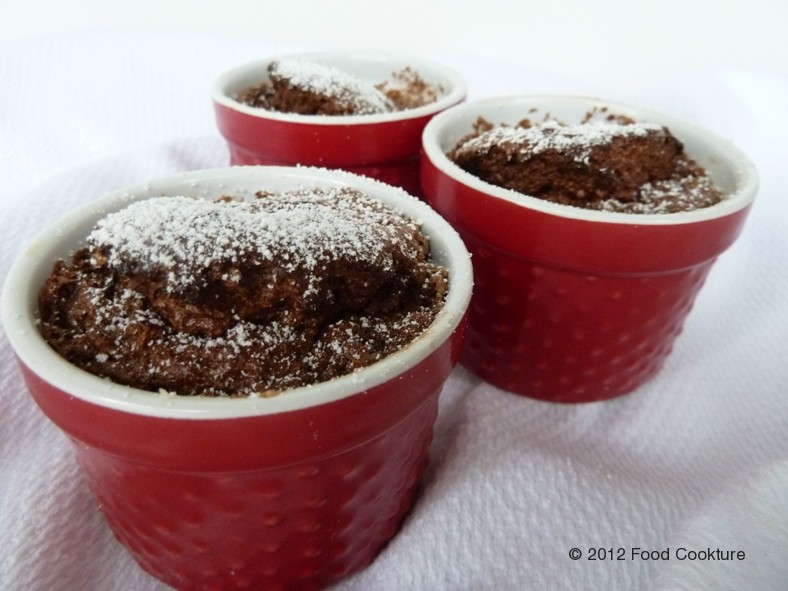
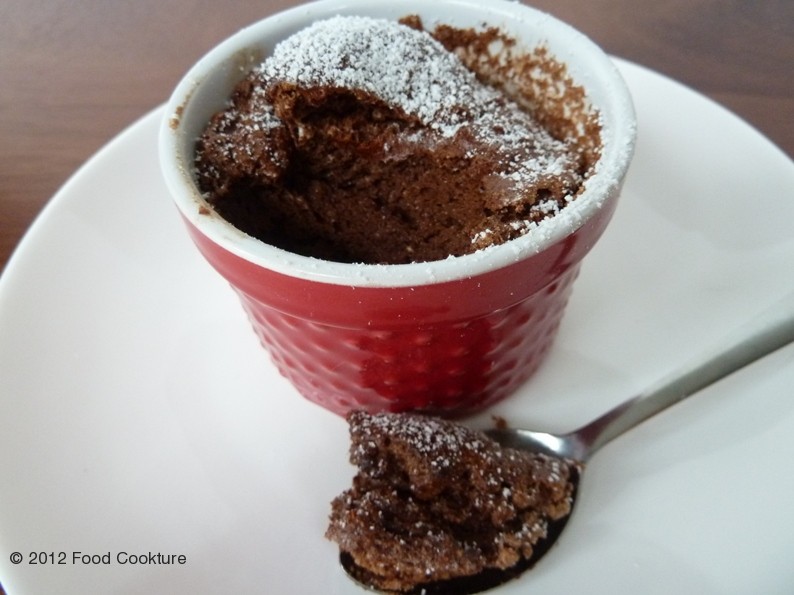
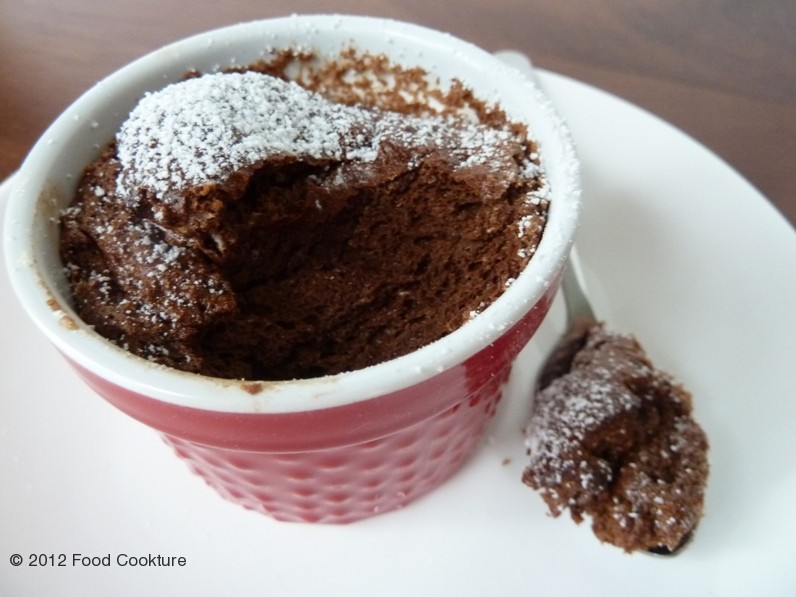
Soufflé’s reputation of “French restaurant sophistication” often intimidates most people not to make it at home. When I serve it (whether savory or sweet) I’m always greeted with a very impressed crowd at the table. It is indeed a special dish, due to its delicate texture and time-sensitive presentation. However, what most people don’t know is that soufflé is quite simple to make; the only challenge (if any) is timing, as it needs to be served immediately to fully enjoy the presentation and reason it got its name. Soufflé comes from the French verb souffler (which can be translated as “to puff up”) and is best enjoyed right out of the oven, while it retains its shape for a somewhat short moment (in fact, it barely lasted for this post’s photo session).

Perhaps the most daunting factor of attempting to make soufflé at home is the thought that it is a time-sensitive, temperamental and often unpredictable dish that may or may not rise. That, in fact, is relative depending on ingredients used, temperature cooked, and amount made. Some soufflés rise well above the dish for a beautiful display; while others have a more modest rise depending also on how much mixture is poured into the dish before baking.

There are many versions of soufflé recipes; which adds an additional component of confusion for someone making it for the first time. Most recipes call for the traditional “base” (or roux) of flour and butter with the addition of hot milk before adding the eggs and flavoring ingredient(s); some use more egg whites than egg yolks; and others use equal amounts of whites to yolks. Soufflé should be baked at high heat though given temperatures of “high heat” often vary per recipe. Some recipes are also inconsistent with how to prepare the mold/ramekin dish prior to baking. So which recipe to try? Which works best? The short answer is: they all work, that is the beauty of making soufflé; it’s more fail-proof than people know.

The science behind the soufflé
The reason a soufflé rises is due to water molecules evaporating from the mixture while cooking in high heat and causing the soufflé to puff up. The egg whites play an important role in this process since they are beaten to stiff peaks and carefully incorporated into the mixture providing more isolated water molecules than if beaten with the egg yolks.

Adding cream of tartar (potassium bitartrate; a byproduct of winemaking) to the egg whites changes their pH and helps stabilize the egg whites while beating them to form stiff peaks -making them more tolerant to high temperatures and maintaining volume while cooking. This process also simulates the chemical reaction of egg whites beaten in a copper bowl; the gold standard method.

More detailed scientific description of this process can be found in the article by Hervé This on the history of soufflé (article in French): Chimie des aliments et du gout: Histoire de soufflés.

About this recipe
Despite having a light and delicate texture, most soufflé recipes are anything but light in terms of calories and fat. I looked through many french recipes and experimented with different versions to achieve my final result. What I discovered is that soufflé is a little more flexible than I had previsoulsy given it credit. Most chocolate soufflé recipes call for the roux base; others omit this base and add butter and milk to the chocolate; while some use only cocoa powder or chocolate with milk; and yet others use a combination of all the above. I wanted to simplify the method of making souffé by using few ingredients as possible; that way I could also make the recipe a little lighter without much sacrifice on substitutions. This recipe is also gluten-free if using gluten-free chocolate.

I experimented with different proportions of egg yolks to egg whites: more egg whites than yolk, equal amount of whites to yolk and even using just eggs whites. Some recipes call for as many as 10 eggs! So I decided to experiment with my own proportion of egg yolks to whites, and add as much chocolate as I thought could work. I did not add any butter or sugar to the mixture, only to the dish/ramekin to help the soufflé rise. You can add a bit of liquor (rum, cognac or Grand Marnier would be wonderful), or use semisweet/milk chocolate instead of bittersweet/dark chocolate. Likewise you can use bittersweet/dark chocolate and add some sugar to sweeten it. I wanted my souffé to be light, low in sugar and have an intense chocolate flavor. I provide some additional suggestions below.

Easy Chocolate Soufflé (Low fat)
Serves 6 medium (1/3 cup) or 8 small (1/4 cup) ramekin servings
Prep time: 15-20 minutes
Cook time: 6-8 minutes
Cooking temperature: 400°F (200°C)

Ingredients:

  • 4 eggs, separated (use 4 egg whites and 3 egg yolks)
  • 4 oz (115g) good quality chocolate (bittersweet/dark or semisweet/milk chocolate)
  • 7 Tablespoons (100ml) milk
  • 1/8 teaspoon cream of tartar (see above “the science behind the soufflé”)
  • Powdered (confectioner’s) sugar for decoration

Additional ingredients (optional) all tested and approved:

  • 1 Tablespoon of sugar (if you use bittersweet chocolate and prefer a sweeter soufflé)
  • ½ teaspoon of orange zest
  • ½ teaspoon of unsweetened cocoa powder (for an extra intense chocolate flavor)
  • Substitute 1 tablespoon of milk for rum, cognac, or Grand Marnier

For the mold/ramekin:

  • ¼ Tablespoon butter
  • 2 Tablespoons sugar (the sugar helps the soufflé not stick to the ramekin and rise, but this can be omitted if you prefer a sugar-free soufflé)

Directions

  1. Preheat oven at 400°F (200°C).
  2. Melt the butter and brush it on the inside of ramekins. Place sugar in ramekin and swirl to coat the inside; transfer the leftover sugar to another ramekin and repeat until all ramekins are buttered and sugar coated.
  3. Melt the chocolate and milk over a double boiler (place chocolate and milk in bowl over a pot of steaming water; do not let bowl touch the water). Stir until smooth and melted.
  4. Once chocolate is melted add one egg yolk at a time and mix well. Set aside.
  5. Beat egg whites and cream of tartar until egg whites form stiff peaks.
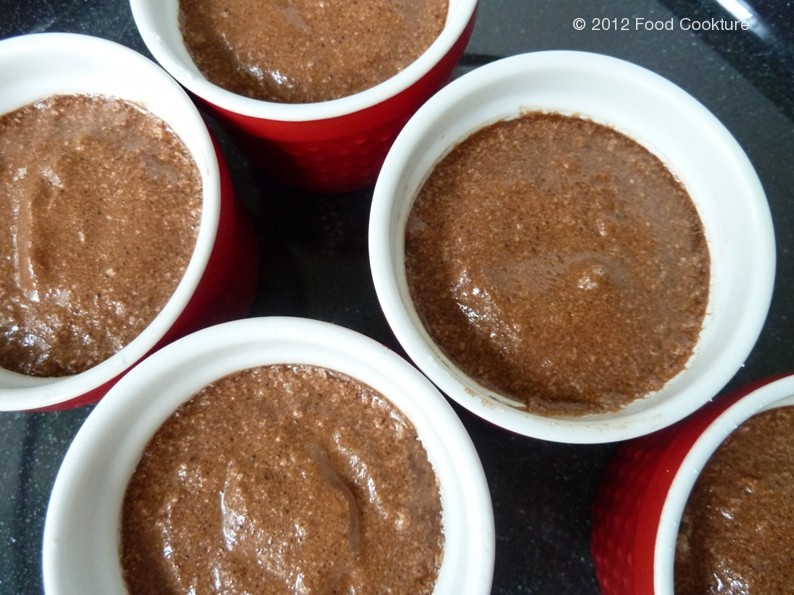
  6. Carefully add 1/3 of the beaten egg whites to the chocolate mixture. Fold in the rest of the egg whites carefully mixing it with the chocolate mixture until well combined; do not over mix.
  7. Bake at the lower rack of the oven for 6-8 minutes or until the soufflé rises and is cooked at the top. Watch it carefully the first time you make this recipe so you do not burn or overcook the soufflé.
  8. Sprinkle powdered sugar on top and serve immediately.

You can make this recipe ahead of time and store it covered in the refrigerator until ready to bake. Enjoy!

Posted in Brunch/Breakfast, Desserts, Light Dishes, Snacks, Vegetarian | Tagged , , , , , , , , , , , , , , , , , , , | 2 Comments